Piemonte Cheese and Wine: Castelmagno, Bra, Raschera and What to Pour
Six DOP cheeses from the mountains and the Langhe, and the local wines Italy's cheese tasters suggest for each, from Arneis to Barolo.
Il Vino Bello ·
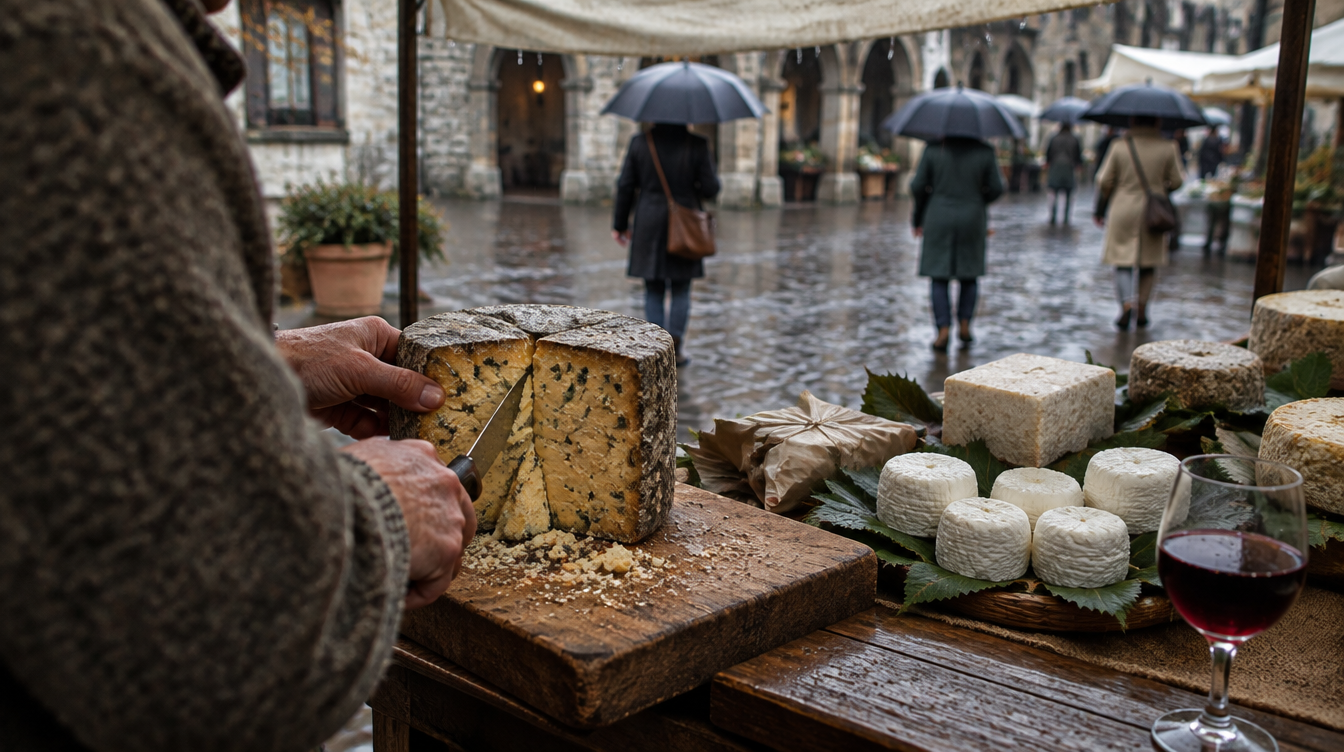
Late October is when Piemonte's cheeses come down the mountain. The summer pastures close, the herds return to the valleys, and the forms made up high in July and August sit maturing in cool cellars. It is also the start of fonduta season. The good news for anyone drinking the region's wines is that the people who taste cheese for a living have already worked out what goes with what.
The pairings below come from the technical cards of ONAF, Italy's national organisation of cheese tasters, and the descriptions from ONAF and the Cuneo Chamber of Commerce. The wines linked are bottles on this site that fit each suggestion.
Castelmagno: the mountain cheese that wants a serious red
Castelmagno can only be made and aged in three comuni of the Valle Grana, Castelmagno, Pradleves and Monterosso Grana, from cow's milk with an optional 5 to 20% of sheep's or goat's milk. Its roots go back to the twelfth century, according to the Cuneo Chamber of Commerce, and it became a DOP in 1996. The label tells you where it was made: blue for "Prodotto della Montagna", made all year, and green for "di Alpeggio", made only from May to October in pastures above 1,000 metres. The minimum ageing is 60 days, so this summer's alpeggio forms are still maturing.
Young, it is crumbly, delicate and lightly salty. With age it turns ochre, firmer and more intense, with notes of walnut, and can grow natural blue-green veins. ONAF suggests "traditional" local reds of good body for younger forms, naming Dolcetto from Diano d'Alba, Grignolino d'Asti and Carema. Try Abrigo Fratelli's Pietrin or Castino's Cadaresca. For long-aged Castelmagno, ONAF moves to Nebbiolo, Barbaresco and Barolo, such as the Barolo del Comune di Serralunga d'Alba from Luigi Pira. Pear or apple compote, mountain honey and walnuts are the classic companions.
Bra and Raschera: two Cuneo classics, young and old
Bra takes its name from the market town where it was traded. Merchants in Bra used to buy cheese from the Cuneo valleys, age it in their cellars and sell it on, and today it is made across the province of Cuneo. There are two styles. Bra Tenero is soft, sweet and milky; ONAF pairs it with young whites such as Arneis and Erbaluce, or young reds like Barbera d'Alba and Grignolino. A Roero Arneis like Stefanino Morra's Elena or Orsolani's Cuvée Tradizione fits. Bra Duro is hard, savoury and smells of broth, hay and wood, and after a year it can be labelled Stravecchio. Here ONAF suggests aged, full-bodied reds: Barbera d'Alba, Barolo, Barbaresco and Ghemme, so think Brovia's Ciaböt del Fi or Brigatti's Oltre il Bosco. The Chamber of Commerce notes that some Bra is now even aged in Barbera or Nebbiolo pomace.
Raschera takes its name from the Alpe Raschera below Monte Mongioie, in the comune of Magliano Alpi. It comes square with rounded edges or round, and the "d'Alpeggio" version is made above 900 metres between 1 June and 15 October. Sweetish when young, it becomes savoury with age; forms aged at least 120 days can say "oltre quattro mesi". ONAF keeps the pairing simple: young Piemonte whites or reds of moderate body, naming Cortese di Gavi, Nebbiolo d'Alba and Dolcetto d'Alba. La Toledana's Vigne Rade, the Nebbiolo d'Alba from Poderi Colla or Bruna Grimaldi's San Martino Dolcetto all work.
Murazzano and Roccaverano: the small soft ones
Murazzano is a fresh, rindless cheese of 300 to 400 grams from the Alta Langa, made from sheep's milk alone or with at least 60% sheep's milk, mostly from the local Pecora delle Langhe. ONAF calls it a cheese that was the women's business: they carried the forms to the Langhe markets in wicker baskets covered with a checked cloth. Its recommended wines are Dolcetto d'Alba, Dolcetto di Ovada and Ruchè, so try La Caplana's Dolcetto d'Ovada or Tommaso Bosco's Oltrevalle.
Roccaverano, known as Robiola di Roccaverano until the name changed in 2023, is made from raw goat's milk, or half goat's milk, in a small group of comuni in the provinces of Asti and Alessandria. Fresh, from the fourth to the tenth day, it is creamy and tangy, and ONAF pairs it with full, fresh and fairly aromatic whites such as Chardonnay, for example Produttori di Govone's Parcella 146. Aged longer, it develops a thin bloomy rind, toasted hazelnut and a little heat, and can take a mature Barolo. ONAF also suggests it with bagnet vert and bagnet russ, the green and red Piemontese sauces.
Toma Piemontese: the whole region on one board
Toma Piemontese is the only DOP made across the entire region, according to the Chamber of Commerce. It was created in 1996 by bringing together many local tomas, from Lanzo to Ormea, and it typically matures for a little over a month. Young toma goes with whites such as Gavi; for older toma ONAF lists Freisa d'Asti, Verduno Pelaverga, Dolcetto and Barbera. Pour Tenuta Olim Bauda's Gavi with the fresh one, then Cascina Massara's Verduno Pelaverga or La Montagnetta's Bugianen with the aged one.
Read together, the cards follow a simple pattern: young cheese, young wine, often white; older cheese, older and fuller reds. Start the board with Roccaverano and Bra Tenero, finish with an old Castelmagno, and let the bottles follow the same order.
Sources
- ONAF, Castelmagno technical card: https://www.onaf.it/uploads/public/20088_castelmagno.pdf
- ONAF, Bra technical card: https://www.onaf.it/uploads/public/19287_bra.pdf
- ONAF, Raschera DOP: https://www.onaf.it/index.php?c=index&a=schedaformaggio&id=240
- ONAF, Murazzano technical card: https://www.onaf.it/uploads/public/11785_murazzano.pdf
- ONAF, Roccaverano technical card (February 2023): https://onaf.it/uploads/public/19958_roccaverano-2023-02-23.pdf
- ONAF, Toma Piemontese technical card: https://www.onaf.it/uploads/public/11878_toma-piemontese.pdf
- Camera di Commercio di Cuneo, "Cuneo Formaggi. I Colori dei sapori": https://www.cn.camcom.it/sites/default/files/uploads/documents/Biblioteca/Pubblicazioni/Pieghevole%20Cuneo%20formaggi%20in%20italiano.pdf