Slow Wine 2027: Piemonte's 40 Snails and the Bottles Worth Finding
Slow Food's guide gives Piemonte more snails than any other region, cheers Roero Arneis and worries about the Monferrato.
Il Vino Bello ·
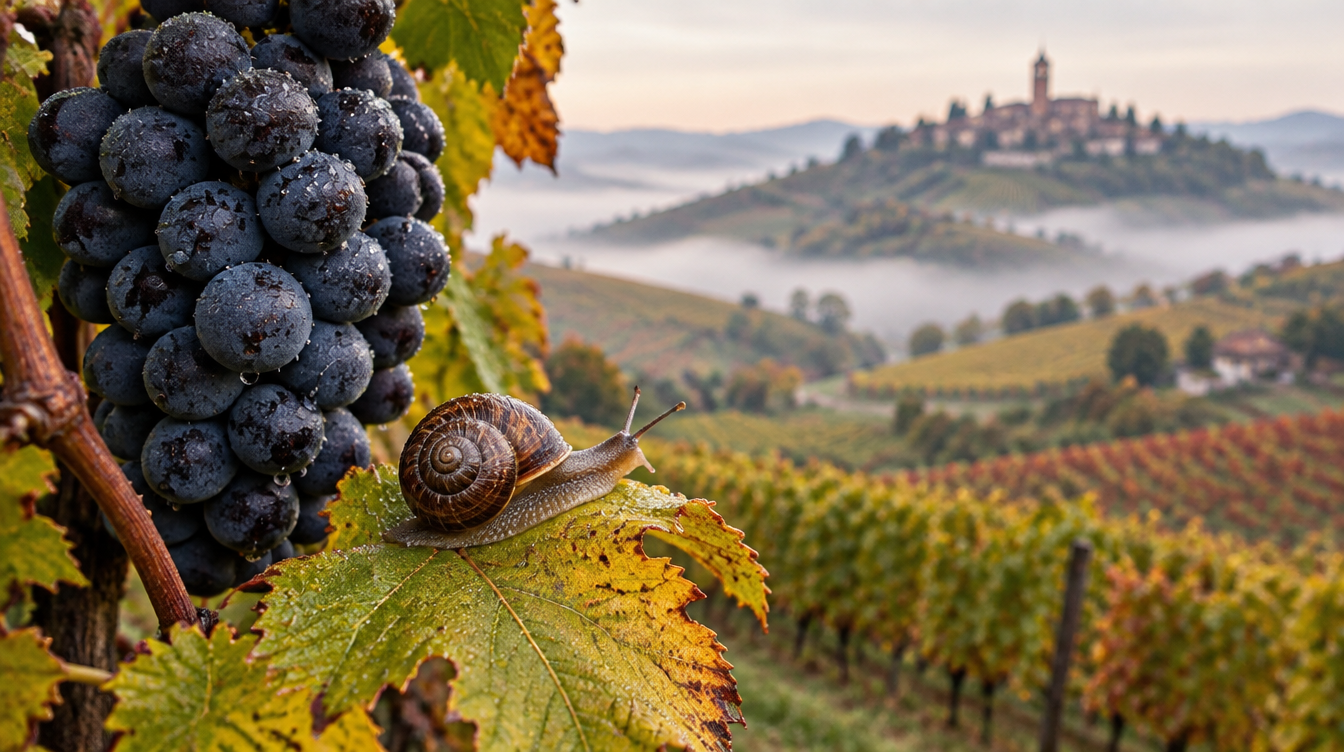
Slow Food's wine guide has handed out its snails for 2027, and no region collected more of them than Piemonte: 40 of the 247. Slow Wine 2027, the guide's seventeenth edition, is in bookshops this month, and its Piemonte list, published on 2 October, makes a handy shopping list for anyone who drinks the region's wines. It also comes with a frank note on how the zones and vintages are doing.
Snails, bottles and coins
Slow Wine gives wineries three kinds of award, and they measure different things. The Chiocciola, the snail, goes to estates that in the guide's words interpret Slow Food's values, in the glass, in the territory and in the environment, together with excellent quality and good value for money. The Bottiglia rewards wineries whose wines showed excellent quality in the guide's tastings. The Moneta, the coin, marks wineries whose wines offer very good value for the price.
Nationally the 2027 edition counts 247 snails, five more than last year, 13 of them new, plus 173 Bottiglie and 56 Monete. The publisher says the guide is built by a network of 253 contributors who visit cellars across Italy, with blind tastings split into regional selections and national finals; more than 10,000 labels were examined and 7,809 wines reviewed.
In Piemonte's own list we count 40 snails, 36 Bottiglie and 10 Monete. Three of the 13 new snails are Piemontese, and each has a wine among the guide's top wines: Bera Vittorio e figli with its Canelli Moscato 2025, Elio Sandri with a Barolo Riserva Perno 2020, and Monte Maletto with a Carema Sole e Roccia 2023. None of the three has a full page on Il Vino Bello yet.
What the editors saw this year
The regional introduction is worth reading for its candour. In our translation, the editors write that it is "probably the Roero" that shows the clearest momentum today, and that Arneis is the surprise: "finally freed from technical aromas and too heavy a hand in the cellar", it gains in drinkability and depth. They credit the "splendid 2025" with helping, but say the change in style is now clear.
In the Langhe, they found Barolo 2022 less disappointing than they had feared, adding that Barolo "almost always" finds a way through. Barbaresco, by contrast, meets a fresh, fragrant vintage of real quality, and most of the Barbaresco top wines in the list are 2023s. Alto Piemonte keeps growing, they say, even if the leap in quality is coming more slowly than expected, on solid foundations of Nebbiolo and Erbaluce.
The Monferrato gets the hardest paragraph. The editors describe a very difficult moment for Barbera there: flavescenza, the vine disease, leaving growers no way out, grape prices too low, a hot and dry climate testing the vineyards and many producers "understandably demoralised". They end it on hope, and on Timorasso, which they say is now growing in too disorderly a way and needs time to find measure and direction.
Bottles to look for
The snail list reads like a map of the region. In the Langhe it includes G.D. Vajra, Cavallotto, E. Pira & Figli - Chiara Boschis, Trediberri, Giuseppe Rinaldi and Roagna; around Barbaresco, Sottimano, Piero Busso, Fiorenzo Nada and Cascina delle Rose; Anna Maria Abbona, San Fereolo and Cascina Corte, the last two with a Dogliani among their top wines; in the Roero, Valfaccenda, Giovanni Almondo and Alberto Oggero; and in the Canavese, Benito Favaro, picked for his Erbaluce di Caluso 13 Mesi 2024.
The guide's own wine picks on our site include:
- Barbaresco: Tre Stelle 2023 from Cascina delle Rose, Cottà 2023 from Sottimano, San Stunet 2022 from Piero Busso and Manzola 2022 from Fiorenzo Nada.
- Barolo: Trediberri's Barolo del Comune di La Morra 2022.
- Roero: Valfaccenda's Roero Arneis Valfaccenda Bianco 2025 and Almondo's Bricco delle Ciliegie 2025, two Arneis that fit the editors' story.
- Dolcetto country: Mossio's Dolcetto d'Alba Bricco Caramelli 2024.
If value matters most, start with the ten Moneta wineries. Several are on our site, each with a wine the guide names among its top wines: Francesco Boschis with the Dogliani Pianezzo 2025, Renzo Castella with the Dolcetto di Diano d'Alba Sorì della Rivolia 2025, Cascina Gentile with the Ovada Tre Passi Avanti 2023, Castello di Tassarolo with the Gavi Il Castello 2025, and Michele Reverdito with a Verduno Pelaverga 2025. L'Armangia in Canelli is a Moneta winery too, picked for its Canelli Moscato Spaccavento 2025.
Where to drink them
The guide's appendix of Locali del Bere Slow, wine shops that pour by the glass, wine bars with a small kitchen and other bars whose offer is in line with Slow Food's wine manifesto, lists 250 addresses nationally and 22 in Piemonte. Eleven are in Turin. In wine country the list includes Vineria Sociale in La Morra, La Cantinetta di Barun in Neive, Petricore in Alba, Enoteca Sardo and Zero Enoteca Conviviale in Bra, Bottega Terreno in Diano d'Alba, Bërla in Murazzano and Vino & Bottega in Costigliole d'Asti.
The book itself runs to 1,152 pages at a cover price of 28 euro. Among the reviewed wineries, 272 serve food, 466 offer rooms and 1,031 give the guide's readers 10 per cent off their wine. And if you happen to be in Milan on Saturday 17 October, Slow Wine holds a ticketed tasting at Superstudio Maxi where you can meet the award-winning producers and the guide's new entries.
Sources
- https://www.slowfood.it/slowine/il-piemonte-in-slow-wine-2027/ (2 Oct 2026)
- https://www.slowfood.it/slowine/slow-wine-2027-ecco-tutte-le-chiocciole/ (21 Sep 2026)
- https://www.slowfood.it/slowine/slow-wine-2027-tutti-i-numeri-della-nuova-guida/ (30 Sep 2026)
- https://www.slowfood.it/slowine/slow-wine-2027-ecco-tutti-i-locali-del-bere-slow/ (1 Oct 2026)
- https://www.slowfoodeditore.it/it/guide-slow/slow-wine-2027-1181.html