Ruchè: The Parish Priest's Grape of Castagnole Monferrato
A rare, rose-scented red from seven villages east of Asti, saved by a priest in the 1960s and now a DOCG of its own.
Il Vino Bello ·
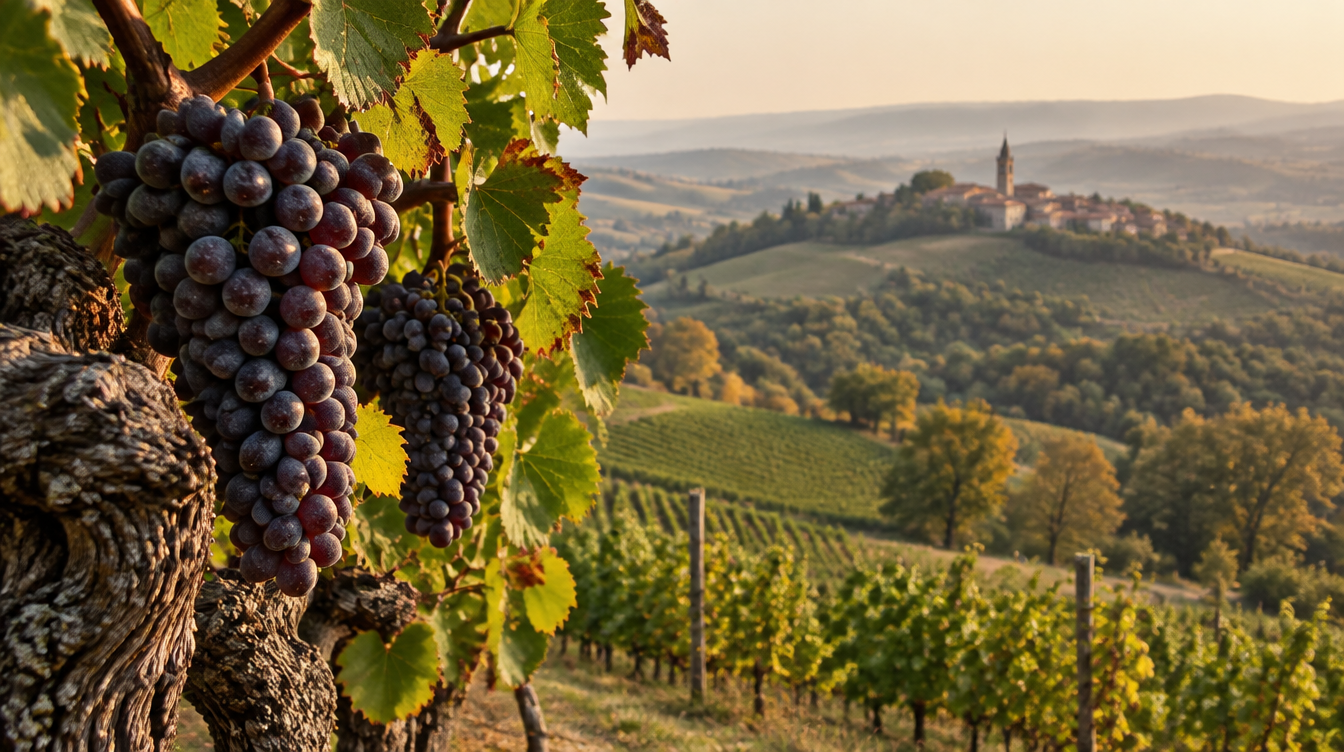
Seven villages, one small grape and a parish priest who refused to let it disappear. Ruchè is one of Piemonte's rarest reds, grown in a pocket of the Monferrato east of Asti, and it smells like nothing else in the region: roses, small red fruit and a streak of spice. If you know Barbera and Grignolino but have never met Ruchè, this is the place to start.
A priest, a vineyard and a promise
For a long time Ruchè was a curiosity. The official production rules note that it was once grown partly as a table grape, for its aromatic character and high sugar at ripeness, and turned into sweet wines for the family. The idea of a dry, serious Ruchè made from the grape alone is credited to the parish priest of Castagnole Monferrato in the 1960s, Don Giacomo Cauda.
According to Vineyards Magazine, he planted the Vigna del Parroco, the "parish priest's vineyard", in 1964, and asked his parishioners to promise that they would buy ten vintages of grapes if needed, so as not to bankrupt the church. That vineyard, just over a hectare, still exists. It belongs to Ferraris Agricola, sole owner since 2016, and its old vines go into the estate's Vigna del Parroco.
Where the grape came from is still debated. One old theory credits Cistercian monks in the twelfth century, and Gambero Rosso mentions a theory that it arrived from Burgundy around the eighteenth. A 2016 DNA study by a CNR team in Turin settled at least the family tree: Ruchè's parents are Croatina and Malvasia aromatica di Parma, which helps explain that perfumed side.
The smallest map in the Monferrato
Ruchè di Castagnole Monferrato became a DOC in 1987 and a DOCG in 2010. The zone covers seven comuni in the province of Asti: Castagnole Monferrato, Grana, Montemagno, Portacomaro, Refrancore, Scurzolengo and Viarigi. The rules describe low, heavily wooded hills on the left bank of the Tanaro, with soils in transition between the marls of the Monferrato and the Pliocene Astian sands, lighter than the Piemonte average, calcareous, dry and very sunny.
The wine must be at least 90 per cent Ruchè, with Barbera and Brachetto allowed for the rest. Vineyards sit between 120 and 400 metres, and yields are capped at 9 tonnes per hectare. Since 2020 there is also a Riserva, aged at least 24 months, of which at least 12 in wood, counted from 1 November of the harvest year. A "vigna" mention can name a single vineyard.
The scale is tiny. AIS Lombardia counted 185 registered hectares in 2020, with 27 bottlers and 21 members of the producers' association founded in 2015. Output went from 420,000 bottles in 2010 to 996,000 in 2019, and by 2024 Vineyards Magazine put it at a little more than a million.
What is in the glass
Gambero Rosso calls Ruchè a semi-aromatic grape with a floral and spicy fragrance, recalling rose and ripe wild strawberries. AIS Lombardia writes of rose petals, small red fruit, lively acidity and delicate tannins.
Producers describe their own wines in similar terms. Ferraris Agricola builds its Clàsic from Ruchè grown in five different spots within the zone and describes rose petal and spice with a delicate tannic weave. Giulio Accornero e Figli makes Viarì from a south-facing vineyard in Viarigi planted in 2015, aged in steel and bottled in spring, with notes of violet, geranium and small red berries.
Producers worth seeking out
- Montalbera, based in Castagnole Monferrato, has a range that runs from La Tradizione and Laccento to Riserva bottlings and a Laccento Passito made from dried grapes, a nod to the grape's sweet past.
- Pierfrancesco Gatto makes the San Vittore Riserva from Montemagno, aged 12 months in 26-hectolitre oak barrels. The estate suggests rabbit, game, wild boar and aged cheeses alongside it.
- I Parcellari bottles Tre Parcelle from three small plots, 0.57 hectares in all, on the east-facing Bricco Costalunga in Portacomaro: about 2,500 bottles, six months in steel and six in bottle.
- Ferraris Agricola, owner of the Vigna del Parroco, has grown quickly. ANSA reports that Luca Ferraris started in 2001 with 10,000 bottles and now sells 300,000 bottles a year in 35 countries.
Ruchè is still a small wine from a small place, and that is part of its charm. If you are travelling through the hills east of Asti, the producers above are a good place to begin.
Sources
- https://www.valoritalia.it/wp-content/uploads/2022/10/Ruche-di-Castagnole-MonferratoDOCG-1.pdf
- https://vineyardsmagazine.com/2024/07/10/ferraris-agricola-sixty-years-of-ruche/
- https://www.gamberorosso.it/notizie/vino/degustazioni/migliori-ruche-2026-guida/
- https://www.aislombardia.it/viniplus/degustando/quando-fare-squadra-funziona-il-ruche-di-castagnole-monferrato.htm
- https://www.destinazionemonferrato.it/ruche-di-castagnole-monferrato-la-forza-della-piu-piccola-docg-del-territorio/
- https://www.ansa.it/sito/notizie/economia/2025/12/12/il-ruche-di-ferraris-ha-conservato-la-vigna-del-parroco-nel-monferrato_e7413ccc-e3c5-4980-8ce9-8fce6f33e02f.html