The wine tools worth owning
You need far fewer gadgets than wine shops suggest. Here is the short list of tools that actually make a difference, what each one does, and when the more expensive ones are worth it.
Why it works
Almost every wine tool solves one of four problems: getting the bottle open, getting the wine off its sediment, getting it to the right temperature, and keeping it once it is open. A good tool for each, and a decent glass, covers nearly everything you will meet.
Price matters less than design. A well-made waiter's friend with an open spiral worm opens a bottle better than most expensive lever machines, and a simple carafe decants as well as a sculpted crystal decanter. The tools worth spending more on are the ones that solve a problem nothing else can: an Ah-So or Durand for old corks, and a Coravin if you like a single glass from a good bottle.
What you need
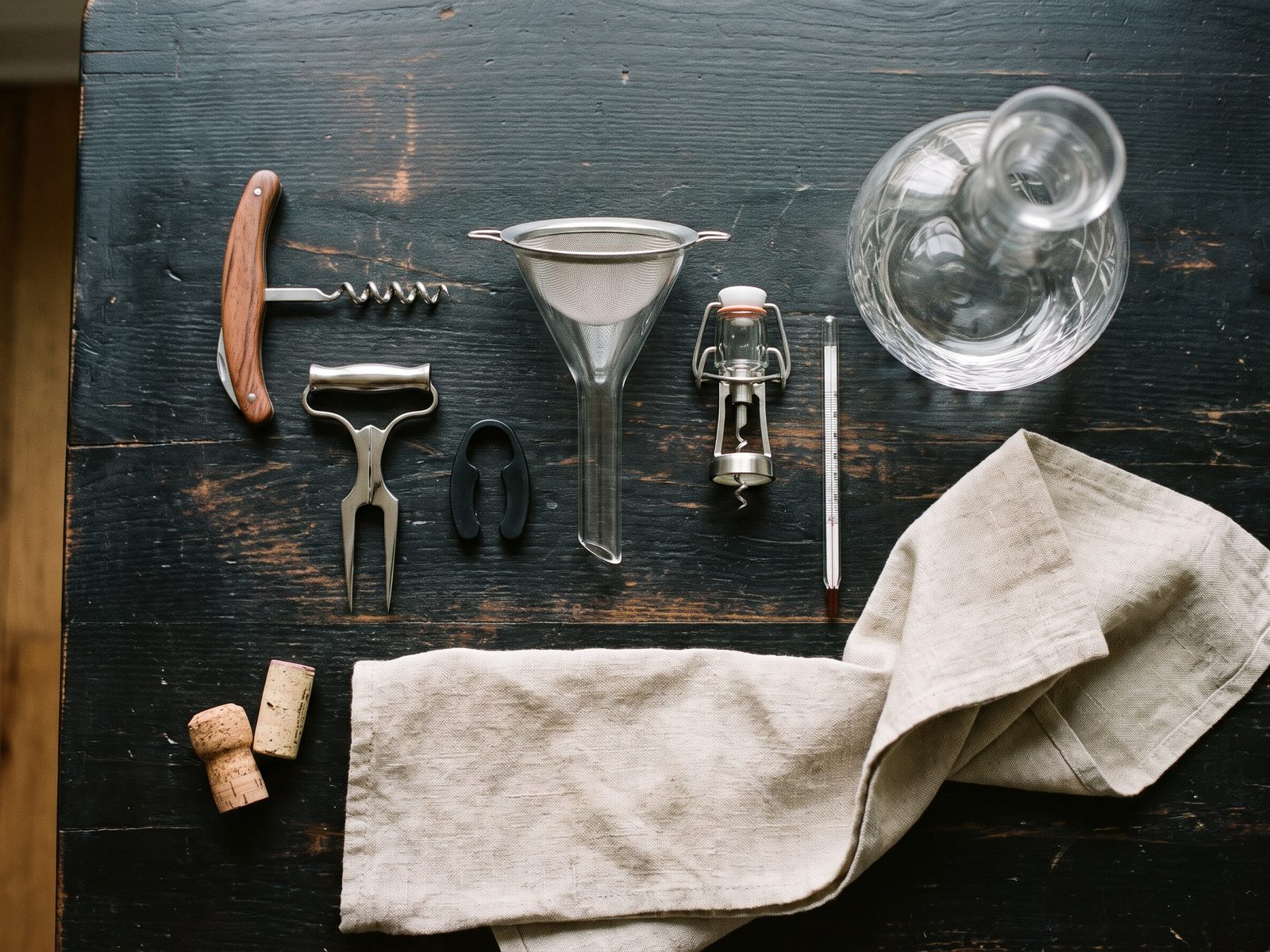
- Waiter's friend corkscrew: The one tool everyone needs.
- Ah-So two-prong cork puller (optional): For soft, old corks.
- Durand cork puller (optional): The safest choice for very old, crumbly corks.
- Foil cutter (optional): Cuts a clean capsule in one twist.
- Decanter: Wide-based for young reds; narrower for old wines.
- Decanting funnel with strainer (optional): Catches sediment and cork crumbs as you pour.
- Decanter cleaning beads and drying stand (optional): Keep the decanter spotless without scratching it.
- All-purpose wine glasses: A tulip-shaped glass for every style.
- Large-bowled Nebbiolo glasses (optional): For Barolo and Barbaresco.
- Sparkling wine stopper: Holds the bubbles for a day or two.
- Inert gas preserver (optional): Argon spray for opened bottles.
- Coravin (optional): A glass from a special bottle without pulling the cork.
- Wine thermometer (optional): For serving at the right temperature.
- Ice bucket: For quick chilling and keeping bottles cold at the table.
- Wine fridge (optional): Steady temperature for a growing collection.
Step by step
- Start with a waiter's friend A two-step lever corkscrew with a sharp, open spiral worm and a small foil knife. It opens almost any bottle and fits in a pocket. Check that the worm is a hollow spiral, like a pig's tail, rather than a solid screw.
- Add an Ah-So or a Durand for older bottles If you keep wines for more than ten years, a two-prong Ah-So lifts soft corks from the outside. The Durand, which combines prongs with a worm, is the safest choice for very old, crumbly corks. See opening old bottles.
- One decanter, simple shape A wide-based decanter or carafe of about 1.5 litres for young reds, and if you open old wines, a narrower one for gentle pouring. Choose one you can clean easily.
- Glasses before gadgets Two or three good glasses do more for wine than any accessory: an all-purpose tulip glass, and a large-bowled one for Nebbiolo if you drink a lot of Barolo and Barbaresco.
- A stopper for bubbles and a way to keep leftovers A hinged sparkling wine stopper, a couple of half bottles to fill with leftovers, and if you like, an argon spray. See keeping an open bottle.
- Keep the rest for when you need it A thermometer, an ice bucket, a decanting funnel and a drying stand all earn their place once you open bottles often. A wine fridge is worth it as soon as you keep more bottles than fit in a cool cupboard.
Tools that are not worth it
Aerating pourers that promise to replace decanting add air, but only a little, and a decanter does the same job better. Winged corkscrews are easy to use but their thick screws tear soft corks. Wine-chilling sticks rarely cool a bottle meaningfully; ten minutes in iced water does.
If something goes wrong
My corkscrew keeps tearing corks
The worm is probably a solid screw or blunt. Replace it with a waiter's friend that has an open spiral worm with a sharp point.
My decanter has stains I cannot shift
Swirl warm water with decanter cleaning beads or a spoon of coarse salt and a little vinegar, rinse well and dry it upside down on a stand.