Keeping an open bottle
Once a bottle is open, air and warmth start to wear the wine down. Cold, less air and the right stopper buy you days, and for a special bottle, weeks.
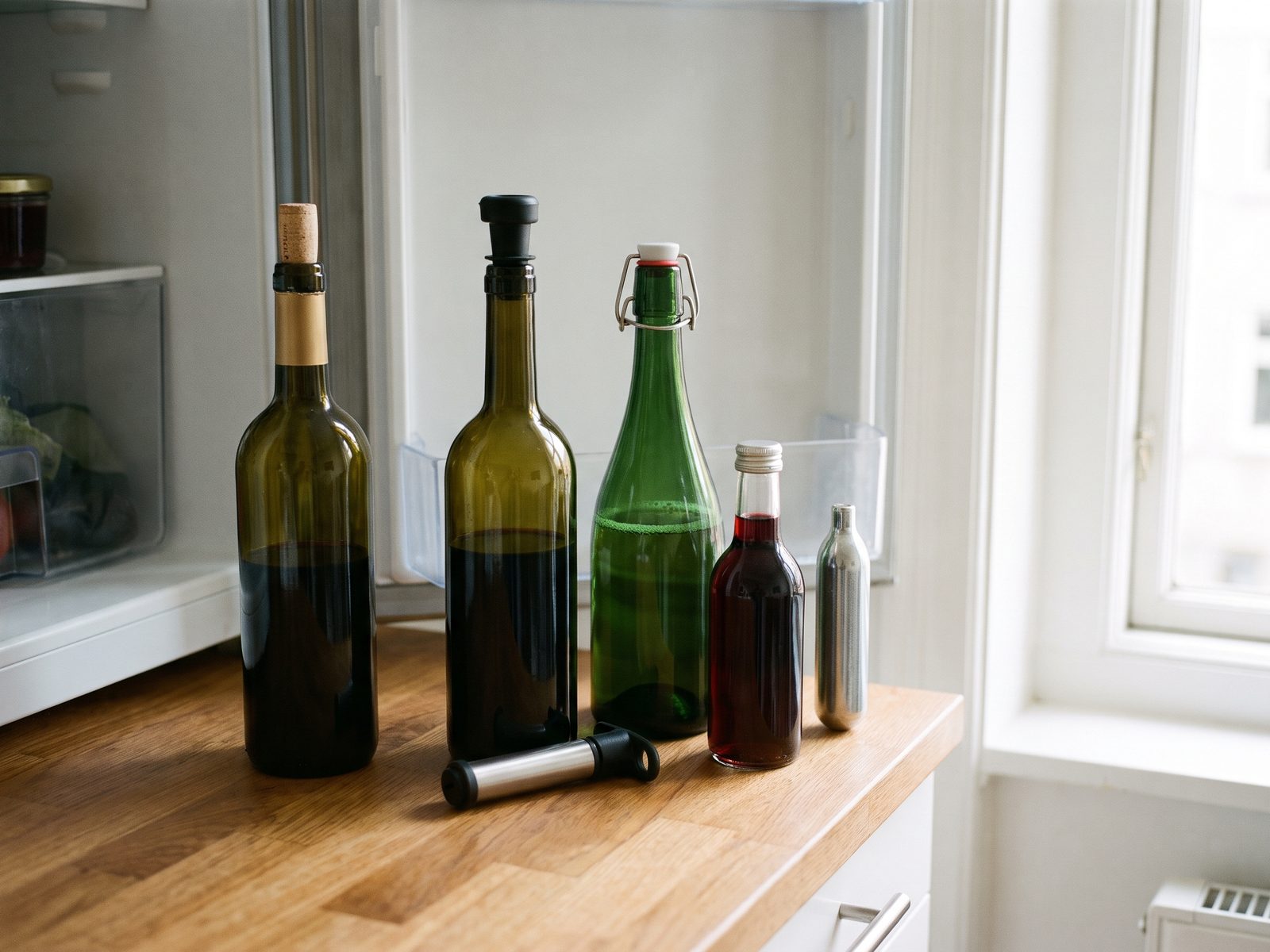
Why it works
An opened bottle is slowly oxidising. Oxygen reacts with the wine's fruit and aroma compounds, first softening them and then flattening them, until the wine tastes tired and finally sour as bacteria turn alcohol into acetic acid. The more air in the bottle and the warmer it is, the faster all of this happens.
So every way of keeping an open bottle does one of three things: it lowers the temperature, it reduces the air touching the wine, or it replaces that air with a gas that does not react. Cold is the cheapest and most effective of the three, which is why the fridge is the right place for leftover reds as well as whites.
Wines differ a lot in how well they cope. Tannin, acidity, sugar and alcohol all protect a wine, so a young Barolo or a Barbera can taste as good or better on the second day, while a delicate old wine or a light Dolcetto fades fast. Sparkling wine has a separate problem: it loses its bubbles, and only a proper clamp stopper holds them.
What you need
- Rubber or silicone stoppers: For bottles whose cork will not go back in.
- Half bottles (375 ml): Fill to the top with leftovers to cut out the air.
- Sparkling wine stopper: A hinged clamp that locks under the lip and holds the bubbles.
- Inert gas preserver (optional): Argon spray that blankets the wine before you close it.
- Vacuum pump and stoppers (optional): A small help for everyday wine, best with the fridge.
- Coravin (optional): Pours a glass through the cork and keeps the rest for months.
Step by step
- Close the bottle as soon as you have poured Do not leave the bottle open on the table all evening if you plan to keep some. Pour what you want, then close it straight away. Every hour open at room temperature costs more than a day closed in the fridge.
- Re-cork it the same way round Push the cork back in with the clean end, the one that was already in contact with the wine, facing down. The outside top has touched the foil and the air. If the cork has swollen too much to go back in, use a rubber or silicone stopper.
- Put it in the fridge upright, red or white Standing upright keeps the surface of the wine small and stops a loose stopper leaking. The cold slows oxidation down dramatically. Take reds out 30 to 45 minutes before you drink them so they warm back up to about 16 to 18 °C.
- Decant leftovers into a smaller bottle Pour what is left into a clean half bottle or a small screw-top bottle filled right to the top, and close it. With almost no air in the bottle there is almost nothing to oxidise the wine. This simple trick beats a vacuum pump. Tip: Keep two or three empty half bottles, washed and dried, for exactly this.
- Use argon for something better An inert gas preserver sprays a heavier-than-air blanket of argon onto the wine before you close the bottle. Give it a two-second spray, stopper the bottle quickly and refrigerate. It adds a day or two to a still wine compared with the cork alone.
- Clamp sparkling wine Fit a hinged sparkling wine stopper that clamps under the lip of the bottle and keep it in the coldest part of the fridge. Good stoppers keep usable bubbles for 1 to 3 days. Moscato d'Asti, with its gentler fizz, is best finished the next day. Tip: The silver spoon in the neck does nothing. It is the cold that helps.
- Use a Coravin for a glass from a special bottle If you want one glass of a great Barolo and to keep the rest for months, a Coravin pours through the cork with a thin needle and replaces the wine with argon. The cork reseals, so the bottle stays almost as it was. Lay the bottle down again afterwards so the cork stays moist.
- Taste before you serve it Smell and taste leftover wine before you pour it for anyone. If it smells of bruised apple, sherry or vinegar, or tastes flat and sour, it has gone. Use it in the pan if it still tastes clean, and pour it away if it does not.
Is a vacuum pump worth it?
A vacuum pump draws some of the air out through a rubber valve stopper. It helps a little, and the stoppers are a good, tight seal in themselves. But it cannot remove all the air, and some people find the pumping also pulls out aroma. Used with the fridge, it is fine for everyday wine. For anything you care about, a small bottle filled to the top or argon does more.
Piemonte's long-lived open bottles
Some Piemonte bottles are made to be kept open. Barolo Chinato, Barolo wine aromatised with quinine bark and spices, and Vermouth di Torino keep well for weeks in the fridge once opened, the vermouth for one to two months. Passito and other sweet wines last one to three weeks. These are the bottles to keep at the back of the fridge for a small glass after dinner.
If something goes wrong
My leftover red tastes thin and cold
It is still too cold. Leave the glass or the bottle out for 30 to 45 minutes, or warm the glass in your hands.
The second-day wine tastes better than the first
Common with young, tannic wines like Barolo, Barbaresco and Barbera. A day of slow air softens the tannins and opens the fruit, which is exactly what decanting does in a few hours.
The sparkling wine went flat overnight
The stopper did not seal, or the bottle was kept somewhere warm. Use a clamp stopper that locks under the lip, keep the bottle in the coldest part of the fridge, and finish it within two days.