A wine evening with friends
A good wine evening needs a plan, not a cellar: a handful of bottles in the right order, enough glasses, food that suits them and water on the table. Here is how to host one, Piemonte style.
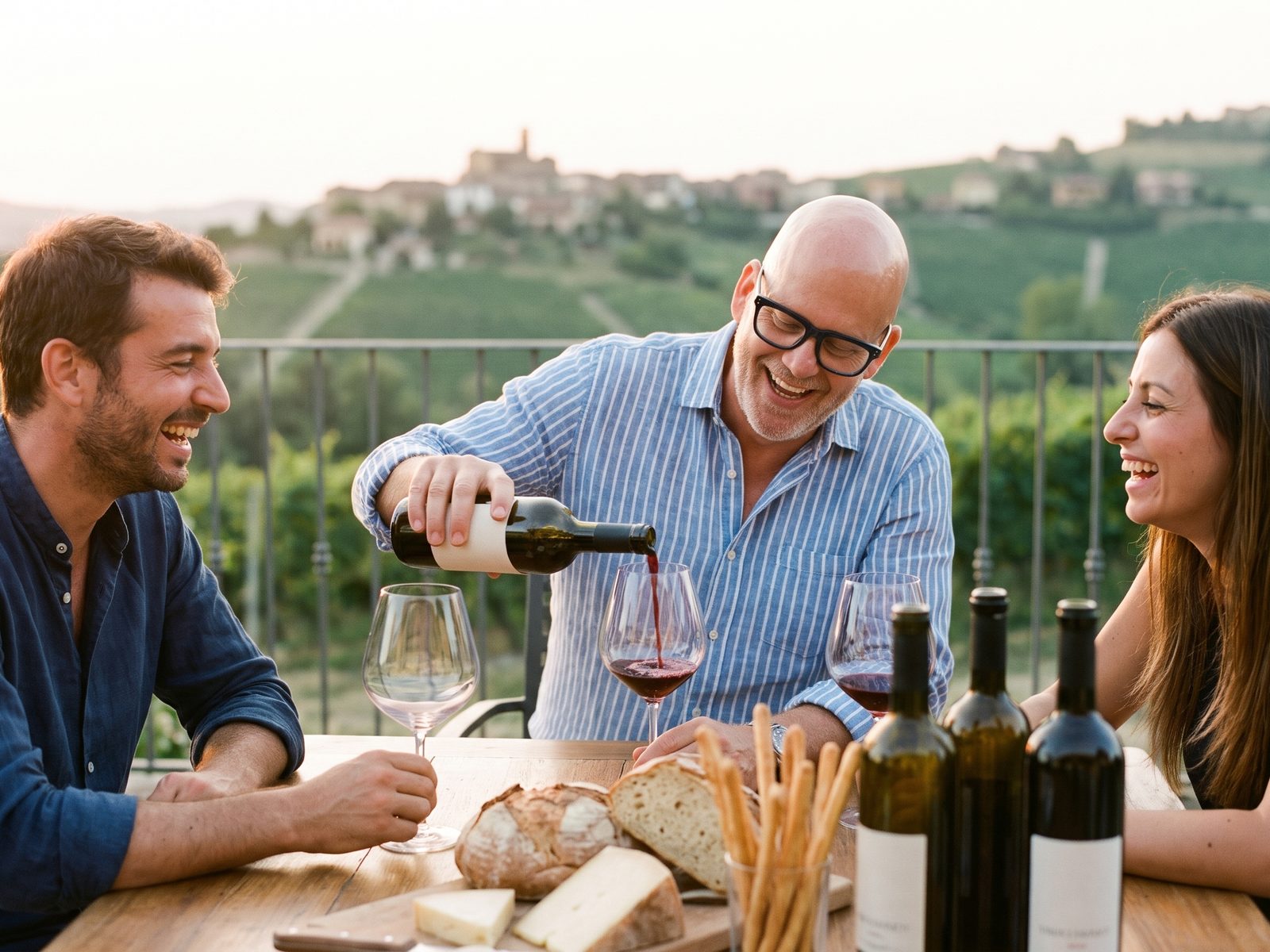
Why it works
Most of what makes a wine evening work happens before anyone arrives. Wine needs the right temperature, some of it needs time in a decanter, and the order you pour in changes how each bottle tastes. A big red before a delicate white makes the white taste thin; a sweet wine before a dry one makes the dry one taste sour.
The basic rule is the same as on a good restaurant wine list: light before full, dry before sweet, young before old, white and sparkling before red. Food smooths the way. Fat and protein soften tannin, salt makes wine taste rounder, and something to eat between glasses keeps everyone sharp.
Piemonte makes this easy, because the region has a wine for every step of a long dinner, from an Alta Langa with the aperitivo to Moscato d'Asti with the hazelnut cake. Building the evening around one region also gives it a story.
What you need
- Wine glasses, two per guest: One for white and one for red; a good all-purpose glass works for both.
- Waiter's friend corkscrew: Open everything before guests arrive.
- Decanter: For the young Barolo or Barbaresco.
- Ice bucket: Keeps sparkling and white wine cold on the table.
- Water jugs: One litre of water per person.
- Sparkling wine stopper (optional): For the half-finished bottle of bubbles.
- Wine thermometer (optional): Takes the guesswork out of serving temperatures.
Step by step
- Pick a theme and four to six wines One region, one grape or one question keeps the evening coherent. A Piemonte evening could be: Alta Langa or Arneis with the aperitivo, Barbera with the antipasti, Langhe Nebbiolo with the pasta, Barolo or Barbaresco with the main course, Moscato d'Asti with dessert. Tip: Browse the award wines for bottles that carry a story.
- Work out how much to buy A 75 cl bottle gives about six glasses of 125 ml, or twelve to fifteen tasting pours of 50 to 60 ml. For a dinner, allow about half a bottle per person over the evening, plus one spare bottle. For a tasting flight, one bottle per wine serves up to twelve people.
- Count the glasses Ideally each guest has a glass for white and one for red, plus a flute or the white glass for sparkling. If you are short, one good all-purpose glass each is enough: rinse it with a splash of the next wine between bottles rather than with water.
- Set the temperatures in the afternoon Sparkling and whites go into the fridge two to three hours ahead. Light reds like Dolcetto and Grignolino get 20 minutes in the fridge before serving. Barbera and Nebbiolo should be at 16 to 18 °C, which in a warm flat also means a short spell in the fridge.
- Open and decant the big reds early Young Barolo and Barbaresco benefit from two to three hours in a decanter. Open and decant them before guests arrive, and open everything else so you are not fighting corks during dinner. Taste each bottle first to catch a corked one in time.
- Put water and food on the table One litre of water per person, in jugs on the table. Grissini, Toma or Robiola cheese, salami and hazelnuts for the first glasses. Serve the food alongside the wine it suits rather than after it.
- Pour in order, and pour small Follow the order you planned. Pour a third of a glass so the wine has room to breathe and the bottles go round. Say a few words about each wine as you pour: where it comes from, the grape, why you chose it.
- Finish with something sweet and something to remember Moscato d'Asti or a small glass of Barolo Chinato with dessert ends the evening on a lighter note. Keep the empty bottles lined up on a sideboard; guests like to take photos of the labels for later.
A Piemonte evening, course by course
Aperitivo: Alta Langa, a Champagne-method sparkling wine, or a chilled Arneis, with grissini, salame and fried sage leaves.
Antipasti: Barbera d'Asti or Barbera d'Alba with vitello tonnato, peppers with bagna cauda or carne cruda.
Primo: Langhe Nebbiolo or a Roero with tajarin or agnolotti del plin in butter and sage.
Secondo: Barolo or Barbaresco, decanted, with brasato al Barolo or a slow-cooked beef cheek.
Cheese: a mature Barbera or the rest of the Nebbiolo with Castelmagno or Toma.
Dolci: Moscato d'Asti with torta di nocciole, or Barolo Chinato with dark chocolate.
Make it a tasting instead
For a shorter evening, skip the dinner and run a tasting: five or six wines in small pours, bread and cheese, and a game such as guess the grape or a Barolo village flight. The tasting games guide has the set-up.
If something goes wrong
One of the bottles is corked
This is why you taste every bottle before guests arrive. Put the cork back, set it aside to return to the shop, and open the spare.
The red tastes harsh with the food
Tannic young Nebbiolo needs fat and protein. Bring out the cheese or the meat course, or swap to the Barbera, which has little tannin.
We ran out of glasses
Rinse each glass with a small splash of the next wine, swirl and discard it. Water dilutes and leaves a taste; wine resets the glass.