Serving and cellaring wine
The right temperature, a decent glass and a cool, dark place to keep the bottles do more for a wine than spending another ten euros on it.
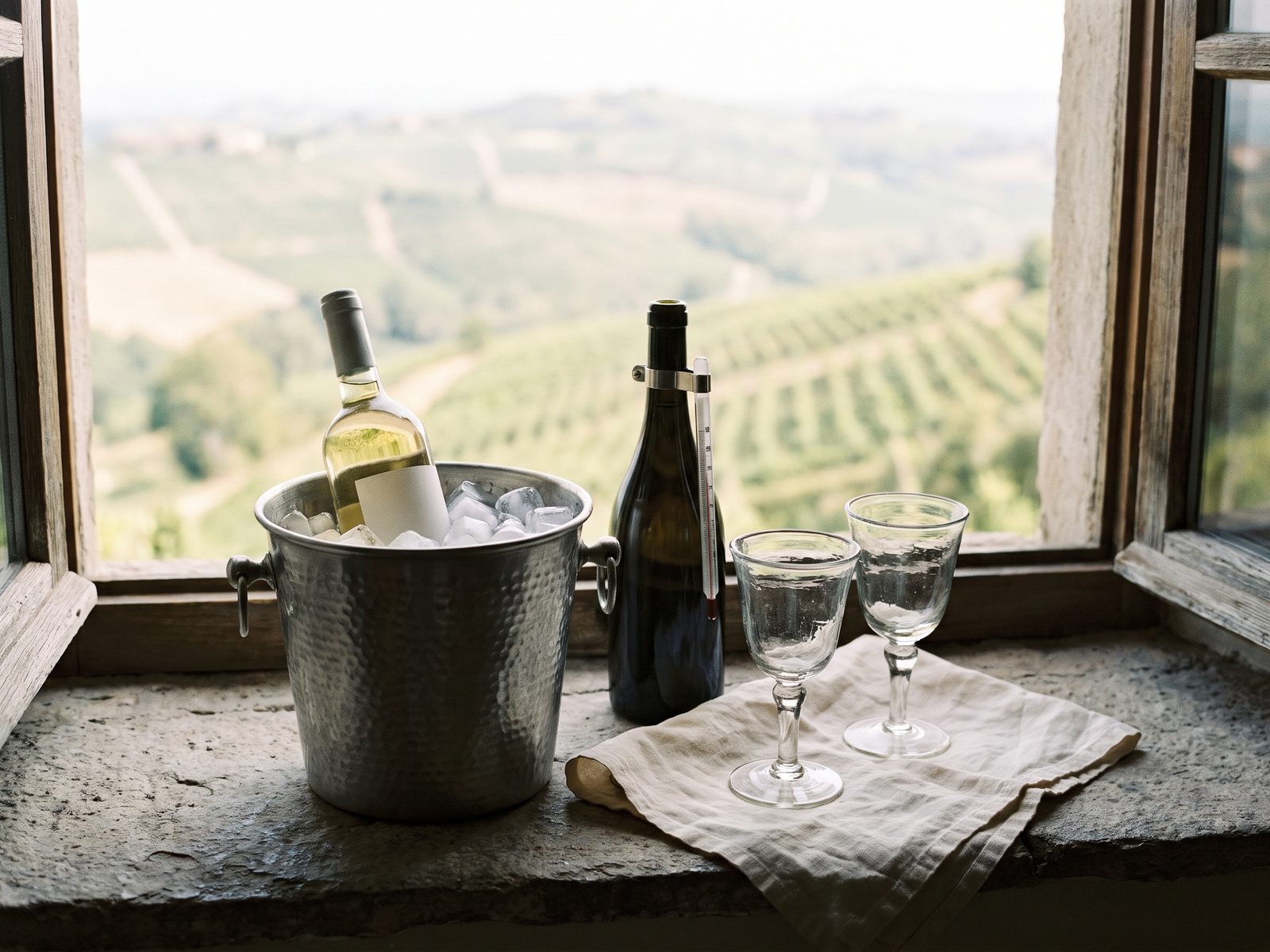
Why it works
Temperature changes how a wine smells and tastes more than almost anything else you control. Aroma is made of volatile compounds, and warmth drives them out of the glass. A little warmth opens a wine up. Too much and the most volatile thing in the glass, alcohol, takes over, so the wine smells hot and tastes heavy. Cold does the opposite: it holds aroma back and makes acidity, tannin and bitterness seem stronger, while sweetness and fruit seem weaker.
That is the logic behind every serving temperature. Crisp whites and sparkling wines are served cold because their freshness is the point and a chill keeps them lively. Fuller whites need a few degrees more so their texture and aroma come through. Reds are served warmer because cold makes tannin taste hard and drying, but not so warm that the alcohol shows. Sweet wines are served cold because cold reins in the sugar and keeps them refreshing.
The advice to serve red at room temperature comes from cool houses. A stone house in winter sat at 15–18 °C; most modern rooms run at 21–23 °C, where a red tastes soft, flat and boozy. So most reds benefit from 20 minutes in the fridge, and most whites come out of the fridge too cold.
Storage follows the same chemistry. Wine changes through slow reactions with oxygen and between its own compounds. Heat speeds them up, temperature swings let the cork breathe air in, and light creates off-flavours. Kept cool, steady and dark, a bottle changes slowly and gracefully. On top of the fridge it is worn out in months.
What you need
- Ice bucket: Any deep container that holds a bottle up to its neck in ice and water; a clean bucket or the sink works.
- All-purpose wine glasses: Clear, thin glass with a generous bowl that narrows towards the rim, holding at least 400 ml.
- Sparkling wine stopper: A hinged stopper that clamps under the lip of the bottle and keeps sparkling wine fizzy for a day or two.
- Wine thermometer (optional): A clip-on or probe thermometer takes the guessing out until you learn what 8 °C and 16 °C feel like.
- Inert gas preserver (optional): A can of argon to spray over the surface of opened wine, which keeps it noticeably longer than a cork alone.
- Wine fridge (optional): Holds wine at cellar temperature if you keep more than a few bottles for more than a few months.
Step by step
- Find the right temperature Look up the style in the table below. Your fridge sits at about 4–5 °C and your living room at about 21 °C, so almost no wine is right straight from either. Think in two moves: whites come out of the fridge a little early, reds go in for a short while. Tip: The simple rule in my family: whites out of the fridge 20 minutes before dinner, reds into the fridge 20 minutes before dinner.
- Chill fast in iced water Fill the bucket with half ice, half cold water, and stir in a good handful of salt. Push the bottle in up to the neck. Water touches the whole bottle, where ice alone only touches it in a few spots, and salt lets the mixture fall below 0 °C. A room-temperature white is cold in about 15–20 minutes; turn the bottle now and then to speed it up. Tip: A red needs only 5–10 minutes in the bucket to come down a few degrees.
- Use the freezer only with a timer If you have no ice, the freezer works, but air chills far more slowly than water. Allow up to 30 minutes for a white and set a timer. A forgotten bottle freezes, the wine expands, and the cork pushes out or the glass cracks. Tip: Wrapping the bottle in a wet tea towel before it goes in speeds things up noticeably.
- Warm a red that is too cold Pour it and cup the bowl of the glass in your hands for a few minutes. For the whole bottle, stand it in a jug of water at about 20–25 °C, never hot, for 5–10 minutes. Tip: Serve a little too cool rather than too warm. A wine warms in the glass, but it never cools down by itself.
- Choose the glass A wide bowl gives the wine room to be swirled, which spreads it across the glass and releases aroma. A rim that narrows gathers that aroma for your nose. Thin glass and a plain bowl let you see the colour. One good all-purpose shape does justice to whites, reds and sparkling wines alike. Tip: Hold the glass by the stem so your hand does not warm a chilled white.
- Pour less than you think Fill the glass to its widest point or a little below, usually about a third. That leaves space to swirl and for aroma to gather. A standard pour is 125–150 ml, so a 75 cl bottle gives five or six glasses. Pour sparkling wine in two goes, letting the foam settle in between. Tip: Sweet wines are served in smaller pours of about 75 ml, fortified wines 60–75 ml.
- Plan the order Each wine should taste good after the one before. Go from sparkling to still, light to full, dry to sweet, and generally white to red. Young wines usually come before old ones, so the older bottle does not seem faded. Sweet wines belong with dessert or after it, fortified wines at the end. Tip: Follow weight more than colour: a light Dolcetto can happily come before a rich, oaked white.
- Store unopened bottles well Find the coolest dark spot you have, away from the oven, radiators and sunny windows. Aim for 12–14 °C and 60–70% humidity, but steadiness matters more than the exact number: a cupboard that stays at 16 °C year round beats a garage that swings from 5 to 25 °C. Lay cork-sealed bottles on their side so the wine keeps the cork moist, and keep them away from vibration. Screw caps can stand. Tip: The worst spot is the top of the kitchen fridge: warm, bright and humming. Your everyday fridge is fine for weeks but too cold and dry for years.
- Keep only the wines that improve Most wine is made to be drunk within a few years of the vintage, and fresh, fruity styles within a year or two. The wines that improve have structure to carry them: firm tannin, high acidity, sugar or concentration. Barolo and Barbaresco, good Bordeaux and Burgundy, Riesling, vintage Champagne, Sauternes and vintage port are the classics; with time their fruit softens into savoury, layered flavours. For more than a handful of such bottles, a wine fridge is the simplest home cellar: it holds 12–14 °C, keeps out light and stays steady. Tip: Compressor fridges cope with warm rooms; thermoelectric ones are quieter but struggle above about 25 °C. Unsure whether a wine will age? Buy several bottles and open one every year or two.
- Look after opened wine Once open, oxygen starts to flatten the fruit, and eventually bacteria turn the wine to vinegar. Cold slows both. Put the cork or a stopper back in and keep every opened bottle in the fridge, reds included. Take reds out 30 minutes before you pour them again. The options, from a half bottle to a Coravin, are compared in Keeping an open bottle. Tip: Pour leftovers into a smaller clean bottle filled to the top. Less air, less damage.
How much wine to buy
A sound rough guide is half a bottle per guest for a dinner, which is about three standard glasses each over an evening. Eight people means four bottles drunk, so buy five or six to be safe, split between white and red according to the food. Add one bottle of sparkling for every four to six guests if you start with an aperitivo.
Adjust for the occasion. A long Sunday lunch drifts past half a bottle each, a weeknight supper rarely reaches it, and a hot afternoon shifts everything towards whites, rosé and sparkling. Put out at least as much water as wine, and open bottles as they are needed.
Glasses worth owning
Start with six or eight good all-purpose glasses: clear, thin-rimmed, a tulip-shaped bowl of 400–500 ml on a proper stem. They serve every still wine well and sparkling wine better than a flute. A flute keeps the bubbles in a pretty column, but its narrow mouth hides the aroma, which is why many Champagne makers now pour into a white wine glass. The wide coupe looks festive and loses fizz and aroma fastest of all.
If you add a second shape, make it a large, wide red glass for Nebbiolo, Pinot Noir and other aromatic reds. Small glasses for sweet and fortified wines are nice but not essential. Wash glasses in hot water with very little detergent and polish them dry; detergent residue or a musty cupboard smell flattens both bubbles and aroma.
If something goes wrong
The red tastes hot and alcoholic
It is too warm, so alcohol is evaporating faster than the fruit aromas and dominating the glass. Put the bottle in the fridge or an ice bucket for 10–15 minutes and it will taste fresher and lighter. If it still burns at 16 °C, it is simply a high-alcohol wine; serve it with food.
The white tastes of very little
Most often it is too cold. At fridge temperature aroma is locked in, and a good white tastes like cold water with acidity. Leave the glass on the table for 10 minutes. If it is still flat once it warms, the wine may be old, or light-struck if it sat in a clear bottle under shop lights.
The red tastes thin, sour or harsh
Cold makes acidity and tannin stand out and mutes fruit. Warm the glass in your hands for a few minutes. If it stays thin and vinegary once warm, and especially if it was opened days ago, it has oxidised and is past drinking.
The cork crumbled or dried out
The bottle stood upright for a long time, or somewhere too dry, and the cork shrank. Use a two-pronged cork puller, which slides down the sides, and pour through a fine sieve to catch crumbs. Taste first: if it smells of sherry or bruised apple, air got in and it has oxidised.
The wine tastes cooked or stewed
It has been heat damaged, in a warm shop, a car boot or a kitchen. The fruit tastes jammy or raisined and flat, and the cork may have pushed up slightly or left a sticky trail down the neck. It cannot be fixed. Cook with it, and store the rest of your wine somewhere cooler.
The sparkling wine went flat overnight
The seal was not tight enough; a spoon in the neck does nothing. Use a hinged stopper that clamps under the lip, and keep the bottle cold, since carbon dioxide stays dissolved far better in cold wine.