Matching wine with food
A good pairing is mostly chemistry: acid, sugar, tannin, salt and heat pushing against each other. Learn the few rules that matter and you can choose a bottle for almost any plate.
Why it works
Food changes how wine tastes, and wine changes how food tastes. Your tongue reads sweetness, sourness, salt, bitterness and umami, and each of them shifts your perception of the next mouthful. Sugar in the food makes a dry wine taste sharper and thinner. Salt makes it taste softer and fruitier. Protein and fat smooth out tannin. Chilli heat makes alcohol burn. A pairing works when these effects help each other, and fails when they pile up in the wrong direction.
The rules come in order of importance. First, match weight: a delicate dish wants a light wine, a rich braise wants a full one, or one will flatten the other. Second, the wine should be at least as acidic as the food, or it tastes flabby and dull. Third, the wine should be at least as sweet as the food, or it turns sour and bitter. After that come tannin, salt, heat and umami, which decide whether a match that looked right on paper actually works in the mouth.
Tannin is the drying, grippy feel of red wine. It binds to protein, which is why a tannic Barolo feels harsh on its own and supple next to a steak or a plate of brasato: the meat's protein and fat give the tannin something to grab other than your mouth. With oily fish, bitter greens or chilli the same tannin turns rough, bitter or metallic. Umami, from mushrooms, aged cheese, soy or cured meat, also makes wine taste more bitter and less fruity. A little salt or a squeeze of lemon in the dish brings the wine back.
Finally, match the sauce rather than the protein. Chicken in a cream and morel sauce, chicken cacciatore and chicken with lemon and herbs are three different pairings. Whatever carries the most flavour on the plate decides the wine. And when you are unsure, look at where the dish comes from. Food and wine that grew up together have usually been adjusted to each other over generations.
What you need
- All-purpose wine glasses: A tulip-shaped glass of around 400–500 ml works for whites, reds and sparkling wine alike.
- Fridge or ice bucket: Temperature changes how acid, tannin and alcohol come across, so it is part of the pairing.
- Corkscrew: A waiter's friend with a double-hinged lever is the easiest to use.
- Lemon, salt and good olive oil: Small adjustments to the dish at the table often fix a pairing faster than changing the bottle.
Step by step
- Find the loudest thing on the plate Look past the protein to whatever carries the most flavour: the sauce, the cooking method, the seasoning. Grilled, roasted and braised dishes taste heavier than poached or steamed ones. A tomato sauce brings acid, a cream sauce brings fat, a glaze brings sugar. That dominant element is what you are matching.
- Match the weight Put light with light and rich with rich. A plate of steamed fish wants a crisp, light white; osso buco wants something with body. Alcohol, oak, ripeness and tannin all add weight to a wine. Weight matters more than colour: a full Chardonnay can carry roast pork better than a thin red. Tip: If in doubt, imagine the wine as a sauce. Would you pour it over this dish?
- Check the acid The wine needs at least as much acidity as the food. Tomato, vinaigrette, citrus and goat's cheese all make a soft, low-acid wine taste flat. High-acid wines such as Barbera, Sangiovese, Sauvignon Blanc and Riesling handle these dishes and also cut through fat the way a squeeze of lemon would.
- Check the sweetness If the food has noticeable sugar, the wine needs as much or more. Fruit desserts, sweet glazes, chutneys and many Asian sauces make a dry wine taste sour and hard. Go off-dry for savoury dishes with a sweet edge and properly sweet for dessert.
- Weigh up tannin Save the tannic reds for red meat, game, hard cheese and rich braises, where protein and fat soften them. Keep them away from oily fish, chilli, bitter leaves and most vegetables. With those, choose a white, a rosé or a light, low-tannin red such as Pinot Noir, Dolcetto or Gamay, served a little cool.
- Allow for salt, heat and umami Salt is wine's friend: it softens tannin and makes sparkling and acidic wines taste rounder. Chilli heat is the opposite: it makes alcohol burn and tannin taste bitter, so choose an off-dry, fruity, lower-alcohol wine. Umami makes wine harsher; balance it with salt or acid in the dish. Tip: Under about 12.5% alcohol is a good rule of thumb for anything spicy.
- Taste together and adjust the food Take a bite, then a sip, and see which way it pulls. If the wine tastes thin or sour, the dish may need salt or the wine may be too dry. If the wine tastes bitter, add salt or a squeeze of lemon to the food. A pinch of salt and a little acid at the table fixes more pairings than a second bottle.
- Serve it at the right temperature Warm wine tastes more alcoholic and heavier, which ruins a good match. Serve crisp whites and sparkling at 6–10 °C, fuller whites at 10–13 °C, light reds at 12–14 °C and bigger reds at 15–18 °C. In a warm room even a Barolo benefits from 15 minutes in the fridge.
Piemonte at the table
Piemonte shows how well local food and wine fit. Vitello tonnato, cold veal under a sauce of tuna, capers and mayonnaise, wants freshness rather than power: Roero Arneis, Gavi or a Nebbiolo rosato. A light, young Dolcetto works for those who want red.
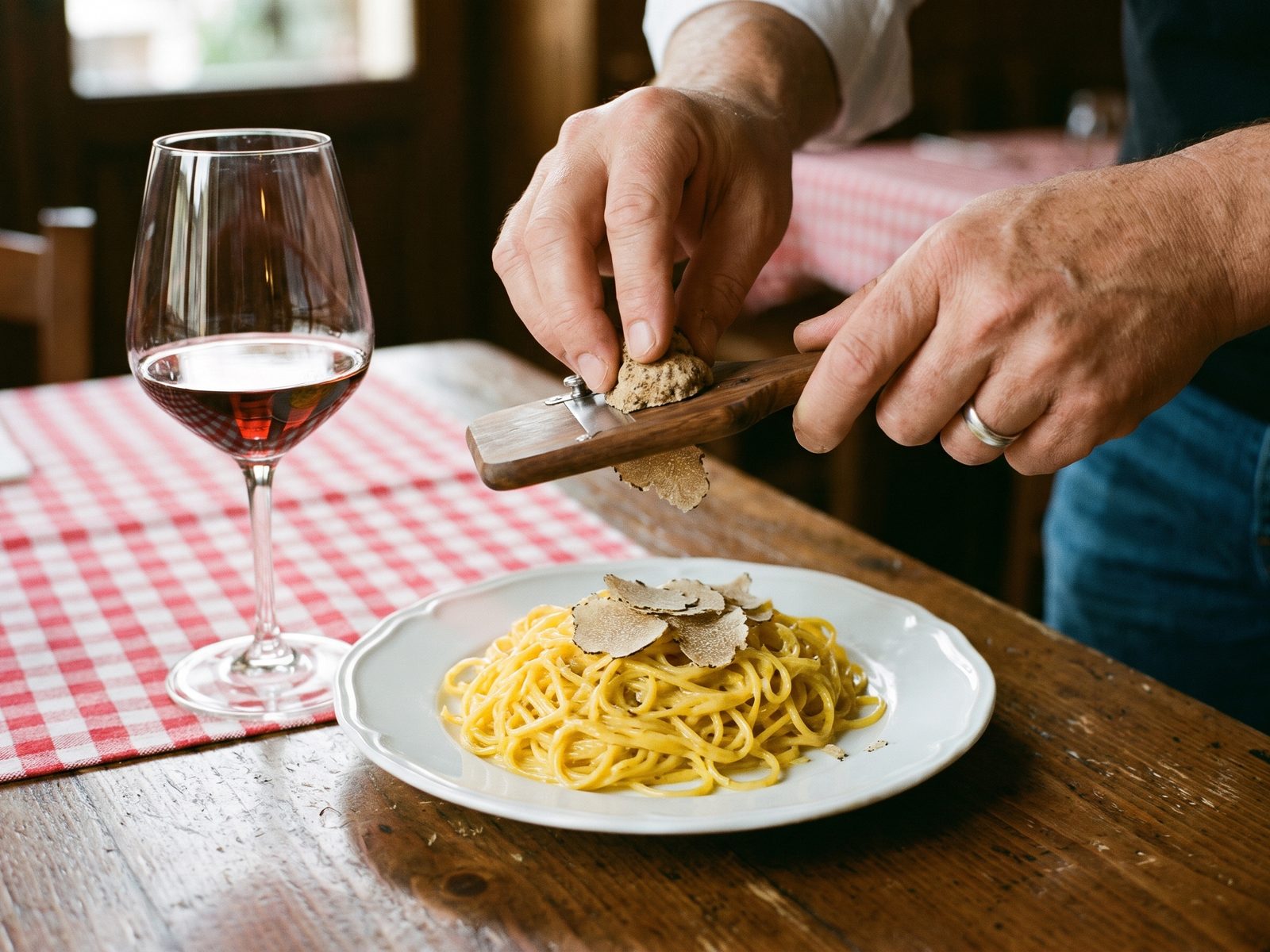
Tajarin al tartufo, thin egg pasta with butter and shaved white truffle, is the moment for an older Barbaresco or Barolo. With age, Nebbiolo's fruit fades into dried rose, earth and forest floor, and the truffle answers it. Keep everything else simple so nothing fights the aroma.
Brasato al Barolo is beef braised for hours in the same wine you drink with it, so the match is built in. Bagna càuda, a hot dip of garlic, anchovy and olive oil with raw and cooked vegetables, is harder: tannin turns bitter against the anchovy and the vegetables. Locals drink young Barbera, whose high acid cuts the oil and garlic and whose low tannin stays friendly. A young Dolcetto does the same job. This is complement and contrast together: matching flavours on one side, acid against fat on the other.
Three safe bottles
If you are cooking for a crowd, or the menu runs from fish to cheese, three styles cover almost everything. A dry sparkling wine, such as Champagne, Franciacorta or Alta Langa, has high acid, little tannin and bubbles that scrub fat and love salt. It works from aperitivo through fried food, eggs, sushi and roast chicken.
A Pinot Noir or similar light red, such as Gamay, Dolcetto or a young Langhe Nebbiolo, is the red that rarely offends. It has enough fruit for duck and mushrooms, low enough tannin for salmon and poultry, and takes a light chill well.
A dry Riesling or other crisp white handles acidic dishes, salads, shellfish, spice and herbs. Add an off-dry Riesling if the food is spicy or a little sweet. Between these three bottles, very few dishes go without a match.
If something goes wrong
The wine tastes metallic with fish
Red wine with oily fish such as mackerel, sardines or salmon can leave a fishy, metallic aftertaste. Research points to iron in the wine reacting with fish oils, and tannic reds make it more obvious. Switch to a white, a rosé or a very light red, and add lemon to the fish.
The red wine tastes bitter with the curry
Chilli heat amplifies both alcohol and tannin, so a big red turns hot, bitter and drying. Choose an off-dry white or a fruity, low-tannin red, chill it a little, and keep the alcohol low. A spoon of yoghurt or raita on the plate also calms the heat.
The dessert makes the wine taste sour
The dessert is sweeter than the wine. Sugar in food makes any less sweet wine taste sharp, thin and bitter, which is why dry sparkling wine fails with wedding cake. Serve a wine that is at least as sweet as the pudding, or finish the dry wine before dessert arrives.
The cheese killed the red
Strong, salty or rind-washed cheeses mute a red's fruit and leave it tasting thin, and soft goat's and bloomy-rind cheeses clash with tannin. Many cheeses are happier with a crisp or aromatic white, or a sweet wine for blue cheese. Save reds for hard aged cheeses such as Parmigiano, Castelmagno or old Comté.
The wine tastes flat and dull with the salad
Vinegar and citrus have more acid than the wine. Use lemon or a milder vinegar in the dressing, add a little more oil, and pick a high-acid white such as Sauvignon Blanc or Vermentino.
Nothing works with the artichokes or asparagus
Artichokes contain cynarin, which makes the next sip taste oddly sweet, and asparagus has green, sulphurous notes that make oak and tannin taste harsh. Choose crisp, unoaked whites such as Grüner Veltliner, Sauvignon Blanc or Verdicchio. Grilling the vegetables or serving them with butter, lemon or cheese softens the clash.