Cooking with wine
Wine brings acidity, fruit and aroma to a dish. Choose a dry bottle you would happily drink, add it early, and give it time to reduce.
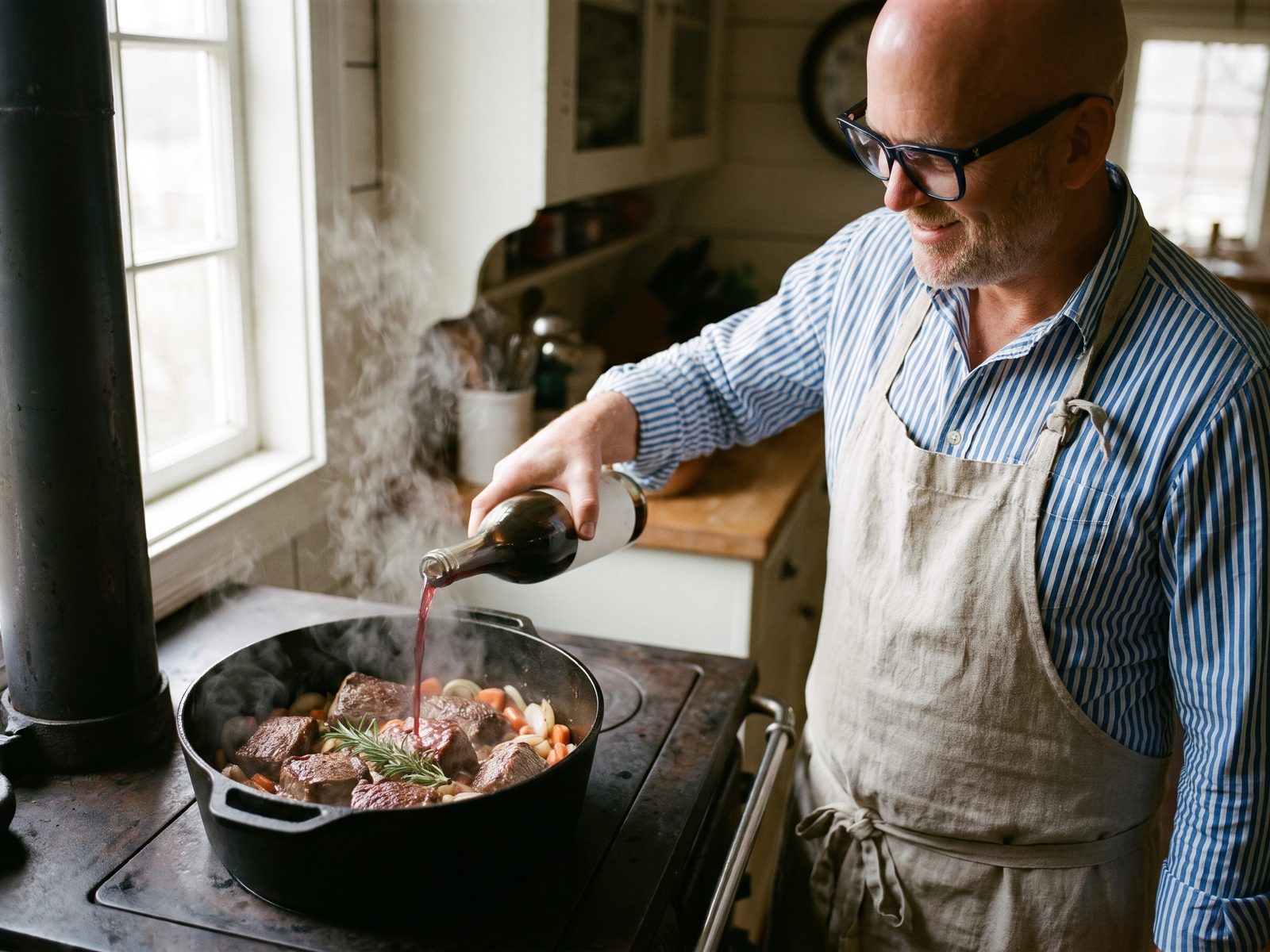
Why it works
Wine does three useful jobs in a pan. It brings acidity, which lifts rich food the way a squeeze of lemon does. It brings fruit and a little sugar, which deepen as the wine reduces. And it brings aroma: alcohol dissolves flavour compounds that water cannot, so a splash of wine helps carry the smell of herbs, onions and browned meat through a dish.
Its best-known job is deglazing. When you brown meat or vegetables, sugars and proteins stick to the pan as a dark crust called the fond. That crust is concentrated flavour. Any liquid will lift it, but wine lifts it and adds acid and fruit at the same moment, which is why so many pan sauces start with a glass of white.
Wine has to be cooked, though. Raw wine in a sauce tastes thin, sour and boozy. Simmered uncovered, water and alcohol evaporate together, the harsh edge goes, and what stays behind is concentrated acid, fruit and body. This is why recipes tell you to let the wine evaporate before adding stock or tomatoes. Once it is diluted in a pot of other liquid it loses the chance to reduce on its own and tends to stay sharp.
Wine does not tenderise meat in any real way. Its acidity is mild, and in a marinade it penetrates only a few millimetres, even overnight. Left too long, it can make the surface soft and mealy while the inside stays as it was. A braise turns tender because hours of gentle heat melt collagen into gelatin. The wine is there for flavour, and it gives you a lot of it.
What you need
- Wide sauté pan or casserole: A wide surface lets wine reduce quickly; a deep, narrow pot takes far longer and stews instead.
- Wooden spoon or flat spatula: For scraping the fond off the base of the pan as the wine hits it.
- Measuring jug: A glass in a recipe usually means about 150 ml, and the amount matters more than people think.
- Heatproof bowl and balloon whisk (optional): For zabaglione and other egg-based wine sauces made over a pan of barely simmering water.
- Ice-cube tray (optional): For freezing leftover wine in useful cooking portions.
Step by step
- Choose a dry wine you would drink Cooking concentrates a wine, so its faults get louder. Use something you would drink, but there is no need to spend much: a clean, inexpensive bottle is ideal. The most useful all-rounder is a dry, unoaked white such as Pinot Grigio, Sauvignon Blanc, Vermentino or a simple Cortese. Avoid supermarket cooking wine, which is salted and tastes of it. Tip: Keep a bottle of dry vermouth in the fridge. It stands in for white wine one for one, and lasts a month or two once open.
- Brown first, then add the wine to a hot pan Brown your meat, onions or mushrooms properly, then pour the wine into the hot pan. It will hiss and steam. Scrape the base straight away while the liquid is bubbling, because hot wine dissolves the fond quickly. Keep the heat at medium-high so it boils hard. Tip: Pour the wine from a jug or glass, never straight from the bottle near a flame.
- Let it reduce before anything else goes in Simmer uncovered until the wine has reduced by at least half, and for a pan sauce until it is syrupy and the smell of alcohol has gone. In a risotto or ragù, cook until you can no longer smell raw wine when you lean over the pan. Only then add stock, tomatoes or cream. Tip: Use your nose. While the steam smells sharp and boozy, keep going; when it smells of fruit and the food in the pan, you are ready.
- Give red wine time and fat Red wines contain tannins, which turn harsh and drying when concentrated quickly. In a long braise with meat, fat and gelatin, those tannins bind to protein and soften. That is why big reds belong in stews and quick pan sauces work better with softer, fruity reds. For a red reduction, choose a supple wine such as a Barbera, Dolcetto or simple Merlot.
- Avoid oaky and sweet wines in reductions Heavily oaked whites, such as some Chardonnay, carry wood tannins and toasty flavours that reduce to bitterness. Off-dry wines concentrate into sweetness that can tip a savoury sauce into jam. Save those bottles for drinking, and cook with something lean and dry.
- Marinate for flavour, briefly A wine marinade flavours the surface and little else. For chunks of beef or game, a few hours to overnight is plenty; for chicken or fish, keep it to an hour or two, because the acid starts to turn the outside mushy. Pat the meat very dry before browning, and use the strained marinade as the braising liquid. Tip: Bring the marinade to the boil and skim it before adding to the pot; raw juices from the meat will otherwise cloud the sauce.
- Use fortified wines with a lighter hand Marsala, Madeira, sherry and port are stronger and more concentrated than table wine, at around 15–20% alcohol. A few tablespoons often do what a glass of wine would. Deglaze with them as normal, reduce briefly, and taste before adding more. Tip: A final spoonful of dry sherry or Madeira stirred into a soup or sauce just before serving adds a lovely aroma. Remember that this alcohol is barely cooked.
- Taste and balance at the end Once the dish is cooked, taste it. Too sharp: a knob of butter, a splash of cream or a pinch of sugar. Flat: a little more salt, or a few drops of the same wine reduced in a small pan. Too thin: reduce further before you adjust anything else, since reducing also concentrates salt.
Leftover wine: freeze it in ice-cube trays
An open bottle of white or red starts to fade within a few days. Before it turns, pour it into an ice-cube tray and freeze it. Most trays hold about 25–30 ml per cube, so four or five cubes make a glass. Once frozen, tip the cubes into a labelled bag; they keep well for about three months.
Drop the cubes straight into a hot pan for deglazing, or into a risotto or braise. They melt in seconds. Frozen wine is for cooking only, because freezing flattens its aroma for drinking, but in a sauce you will not taste the difference.
Substitutes when you don't use alcohol
For white wine in savoury cooking, use the same amount of chicken or vegetable stock with about a teaspoon of white wine vinegar or lemon juice per 150 ml. Verjuice, the juice of unripe grapes, is the closest match: tart and gently fruity, and it can replace white wine one for one.
For red wine in a braise or stew, use beef or mushroom stock with a teaspoon of red wine vinegar per 150 ml, and a spoonful of unsweetened red grape or pomegranate juice for fruit. For sweet uses such as poached pears, use red or white grape juice with a squeeze of lemon, and cut back the sugar.
Dealcoholised wines also work, though most still contain a trace of alcohol, usually under 0.5%, so they are not suitable for everyone. Whatever you use, still reduce it before adding other liquid: the point is the concentrated acidity and fruit, and that is what the substitutes provide.
If something goes wrong
The sauce tastes sour and raw
The wine went in with the other liquid and never reduced on its own, or there was simply too much of it. Simmer uncovered for longer to drive off more, then round it out with a knob of butter or a pinch of sugar. Next time, reduce the wine by at least half before adding stock.
It tastes boozy
The wine was added late or only cooked for a minute or two, which leaves most of the alcohol in. Simmer it uncovered for a few more minutes until the sharp smell goes. Fortified wines stirred in at the end will always taste of alcohol, so use them sparingly.
The meat turned a purple-grey colour
Red wine pigments stain whatever they touch, especially pale meat marinated in it and onions or rice cooked in it. Pat marinated meat very dry and brown it hard, which hides most of the colour. For chicken or a pale risotto, use white wine unless you want the colour, as in a risotto al Barolo.
The reduction is bitter or harsh
An oaky white or a tannic red was boiled down quickly, concentrating wood and tannin. Soften it with butter, cream or a little stock, and a pinch of sugar if needed. Next time, choose an unoaked white or a soft, fruity red for quick sauces, and keep big reds for long braises.
The dish is too sweet
The wine was off-dry, or you used sweet Marsala or port where a dry wine was meant. Balance it with a squeeze of lemon or a few drops of vinegar and a little more salt, or dilute with stock. Check the label: Marsala and sherry both come in dry and sweet styles.
The sauce is thin and won't coat a spoon
It has not reduced enough, or the pan was too narrow and deep. Pour it into your widest pan and boil it hard. A pan sauce is ready when it leaves a clear trail when you drag a spoon across the base.