Piemonte wines: Barolo, Barbaresco, Barbera and more
A small region of fog, hills and hazelnut groves that makes some of the world's great reds, plus everyday Barbera, crisp whites and Moscato. Here is how to find your way in.
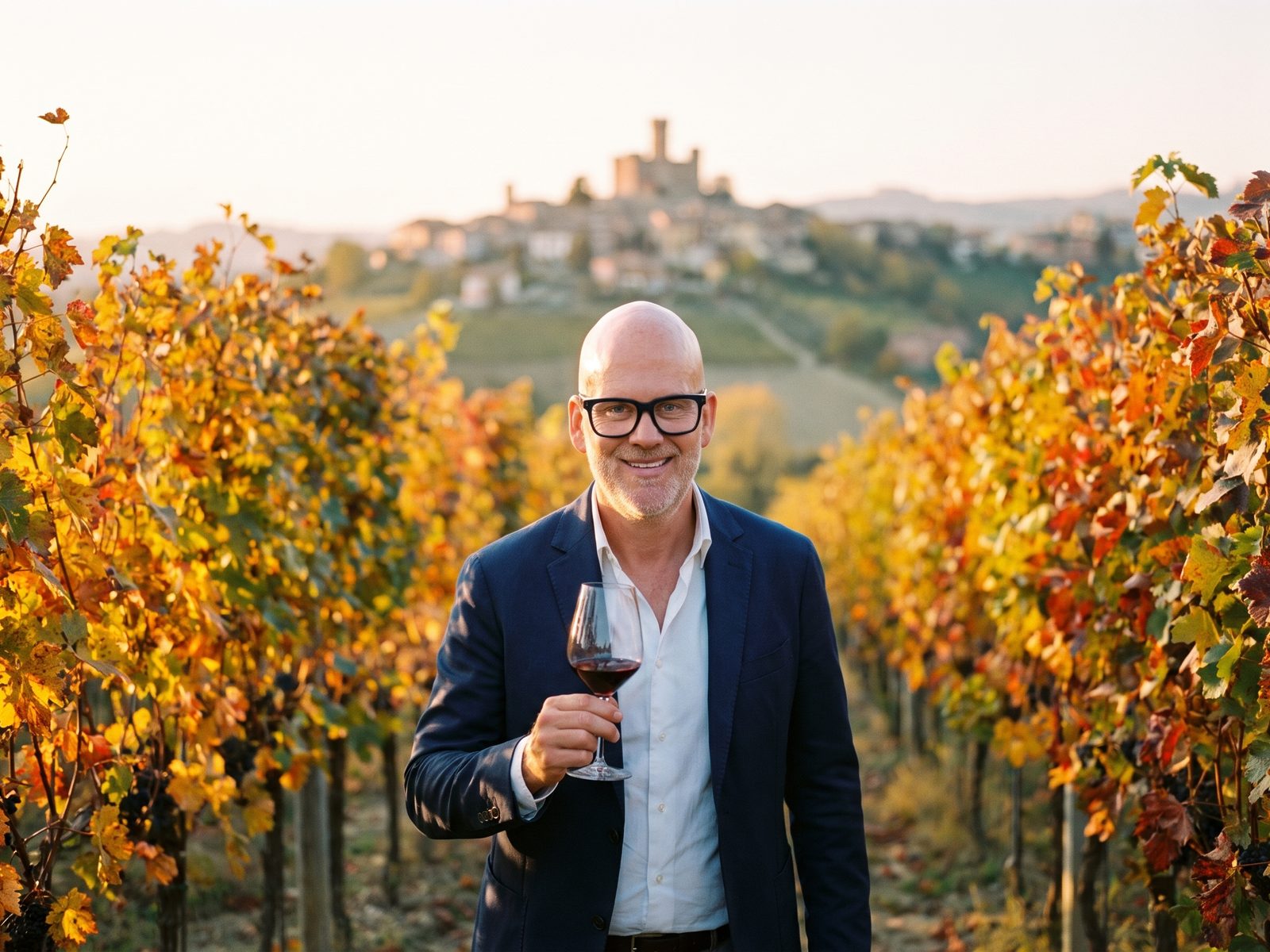
Why it works
Piemonte means 'at the foot of the mountains', and the Alps wrap round it on three sides. The climate is continental: cold, foggy winters, hot summers and long, cool autumns. That long autumn is the point. Grapes can hang into October, gaining ripe flavour and tannin while the cold nights keep their acidity high. Most Piemonte wine tastes fresh even when it is powerful, and that freshness is why it works so well at the table.
Nebbiolo, the great grape here, probably takes its name from nebbia, fog. Some say it is the autumn fog that settles in the valleys at harvest, others the dusty bloom on the ripe berries. It buds early and ripens late, so it only succeeds on the best south-facing slopes, where the sun hits the vines and the fog drains away below. Lesser slopes go to Barbera, Dolcetto or hazelnuts.
The heart of it is three hilly areas south of the river Po. The Langhe, round Alba, gives Barolo and Barbaresco on marl soils of clay and limestone. The Roero, across the Tanaro river, has looser, sandier soil and lighter, more fragrant wines, red and white. The Monferrato, round Asti and Casale, is Barbera and Moscato country. In 2014 UNESCO listed these vineyard landscapes as a World Heritage Site, for centuries of farming that shaped the hills you see today.
Food matters as much as the wine. Alba is also the home of the white truffle, Tuber magnatum, dug from the woods in autumn, and of hazelnuts, Castelmagno cheese, veal and egg pasta. The wines grew up beside this cooking: high acidity to cut butter and egg yolk, firm tannin for slow-braised meat. Drink them with food and they make sense.
What you need
- Large-bowled glass: A wide Burgundy-style bowl gives Nebbiolo's perfume room to open; a standard wine glass is fine for Barbera, Dolcetto and the whites.
- Decanter or jug (optional): Young Barolo and Barbaresco soften with a few hours of air, and old bottles need decanting off their sediment.
- Good corkscrew: A two-step waiter's friend handles most corks; a two-pronged Ah-So is safer for old, crumbly ones.
- Wine thermometer or a cool cellar (optional): Serve Nebbiolo at 16–18 °C, Barbera and Dolcetto a little cooler, whites at 8–10 °C and Moscato at 6–8 °C.
- A cool, dark place and patience: Good Barolo and Barbaresco want 8–15 years from the vintage to show their best; a cupboard at a steady 12–15 °C will do.
Step by step
- Start with Dolcetto and Barbera These are what Piemontese families drink on a weekday. Dolcetto is soft, dark and grapey, with a bitter-almond finish and gentle acidity; the best come from Dogliani and Diano d'Alba. Barbera is the opposite: deep colour, little tannin and bright, mouth-watering acidity, with sour cherry and plum. Taste one of each with a plate of salumi and you will understand the region's everyday table. Tip: Try a Barbera d'Asti next to a Barbera d'Alba. Asti versions are often juicier and brighter; Alba versions, grown beside Nebbiolo, tend to be fuller and rounder.
- Move on to Langhe Nebbiolo Langhe Nebbiolo is the same grape as Barolo, from younger vines or less famous slopes, with no minimum ageing. It shows you Nebbiolo's signature without the cost or the wait: a pale, translucent colour, a scent of roses, red cherry and dried herbs, then surprising grip from tannin and acidity. If you like it, you will like the big names.
- Taste Barbaresco, then Barolo Both are 100% Nebbiolo, grown a few kilometres apart. Barbaresco is aged at least 26 months and Barolo at least 38, and Barolo usually has a little more weight and tannin. Look for tar, roses, liquorice, dried cherries and, with age, leather, truffle and tobacco. Buy a bottle at least eight years old if you can, or decant a younger one for a few hours. Tip: Open a Barbaresco and a Barolo from the same vintage side by side. The difference is small but real, and it trains your palate faster than any book.
- Discover the whites Arneis from the Roero is soft and fragrant, with pear, white flowers and almond, and is best within two years. Gavi, made from Cortese in the hills towards Liguria, is lean, citrusy and saline, good with fish and vegetable starters. For something more serious, look for Timorasso from the Colli Tortonesi, sold as Derthona: a full, mineral white that can age ten years, rescued from near extinction in the 1980s.
- Keep sweet and sparkling for the end Moscato d'Asti is lightly fizzy, gently sweet and only about 5.5% alcohol, tasting of fresh grapes, peach and orange blossom. Asti Spumante is the fully sparkling version, a little stronger. Brachetto d'Acqui is a sweet, pale red bubbly that smells of roses and strawberries. For dry fizz, Alta Langa is made by the traditional method, like Champagne, from Pinot Noir and Chardonnay. Tip: Serve Moscato d'Asti well chilled with fruit tarts, hazelnut cake or panettone. It is light enough to finish a long meal without weighing on it.
- Try the local curiosities Grignolino is pale, peppery and surprisingly tannic, a lovely chilled lunch red. Ruchè, from a handful of villages near Castagnole Monferrato, is floral and spicy. Freisa, a relative of Nebbiolo, can be dry or slightly sweet and fizzy. In the north, Alto Piemonte makes Nebbiolo under the name Spanna, in Gattinara and Ghemme: leaner, more mineral and often far cheaper than Barolo.
- Visit in autumn From late September to early November the hills turn gold and red, harvest is on, and the truffle season opens. Dolcetto is picked first, then Barbera, and Nebbiolo last, often well into October. Book cellar visits ahead; most producers are small families and are busiest at harvest. Tip: Stay a night in Alba, Barolo or La Morra and walk the vineyard paths in the morning, when the fog fills the valleys and the hilltop villages float above it.
- Buy from small producers Piemonte is a region of family estates, many making a few thousand bottles from vineyards they have farmed for generations. Buying at the cellar door is usually cheaper than in shops, and you can taste first. Ask for a producer's Barbera or Langhe Nebbiolo; it tells you their style and is often the best value they make. Tip: Ask about the vintage. Hot years such as 2003 and 2017 give riper, earlier-drinking wines; cooler, classic years such as 2010 and 2016 need longer in the cellar.
Visiting in autumn: harvest, fairs and the Alba truffle fair
September and October are the best months. Asti holds its Palio, a bareback horse race through the town, in September, and the Douja d'Or wine festival runs alongside. Village sagre, local food festivals, fill the weekends with polenta, hazelnut cakes and new wine.
The International White Truffle Fair in Alba runs on weekends from early October to early December. At the market you can smell, weigh and buy truffles, each checked by a judging panel. Prices change every week with the weather; a dry autumn means fewer truffles and higher prices. Buy a small one, keep it in a jar with kitchen paper in the fridge, and use it within a week, shaved raw over buttered tajarin or fried eggs.
Plan for slow driving on winding hill roads, and choose a driver or book a tour if you will be tasting. Many cellars spit and pour small measures for exactly this reason.
Piemonte dishes and the right bottle
Start the meal with Arneis or a young Dolcetto alongside vitello tonnato, carne cruda all'albese or peppers with bagna càuda. Barbera is the best match for bagna càuda itself, its acidity cutting through the anchovy, garlic and oil.
With tajarin or agnolotti del plin in butter and sage, pour Barbaresco or a Langhe Nebbiolo. With white truffle, choose an older Barolo or Barbaresco, whose earthy, faded notes echo the truffle; a powerful young wine would cover it. Brasato al Barolo, beef braised in the wine, wants a bottle of the same, or a sturdy Barbera if you would rather not cook with Barolo.
Bollito misto with green sauce is a Barbera or Dolcetto dish. With cheese, try Castelmagno with Barolo and fresh Robiola di Roccaverano with Arneis. Finish with bonet, a chocolate and amaretti custard, and a small glass of Barolo Chinato, Barolo infused with quinine bark and spices, or with Moscato d'Asti and hazelnut cake.
Find them on Il Vino Bello
Every winery and wine mentioned here can be found on the wineries page and the wines page, with this year's award winners marked. To taste them where they are made, plan a few winery visits on Tastings.
If something goes wrong
My Barolo is harsh and drying
It is probably too young. Nebbiolo has some of the highest tannin of any red grape, and in its first years it can grip like strong tea. Decant it two to four hours ahead, serve it at 16–18 °C rather than warm, and drink it with fatty, protein-rich food, which softens the tannin. Better still, keep the rest of the case for another five years.
It looks too pale to be serious
Pale is normal. Nebbiolo has thin skins and few of the pigments that make other reds dark, so even a great Barolo looks like a light red in the glass and turns brick-orange at the rim within a few years. Judge it by the scent and the grip on your gums. A very dark Barolo usually means a modern, heavily oaked style, not a better wine.
Barbera or Nebbiolo with pizza?
Barbera. Its high acidity matches the tomato, and its low tannin will not clash with the cheese or turn bitter. Nebbiolo's tannin and delicate perfume are wasted on pizza and fight with tomato. Save it for meat, mushrooms and truffles.
Moscato d'Asti is too sweet for me
Serve it colder, at 6–8 °C, which makes it taste less sweet and fresher, and drink it with dessert rather than on its own. A dessert as sweet as the wine makes the wine taste drier. If you still want less sugar, try a dry Moscato labelled Piemonte, or Alta Langa for bubbles.
The Barolo smells of vanilla and toast, not roses
That comes from new French barriques. In the 1980s and 90s some producers moved from large old casks, called botti, to small new oak, starting a long argument known as the Barolo wars. Today most sit in between. If you prefer the classic perfume, look for producers who age in large old botti.
My old bottle is cloudy with bits in the glass
That is sediment, tannin and pigment that settled out with age, and it is harmless. Stand the bottle upright for a day, then decant it slowly over a light, stopping when the sediment reaches the neck.