Tasting games and blind tasting
Hide the label and everyone tastes more carefully. Blind tastings, guess-the-grape rounds and a Barolo village flight turn a bottle evening into a game, and teach more than any book.
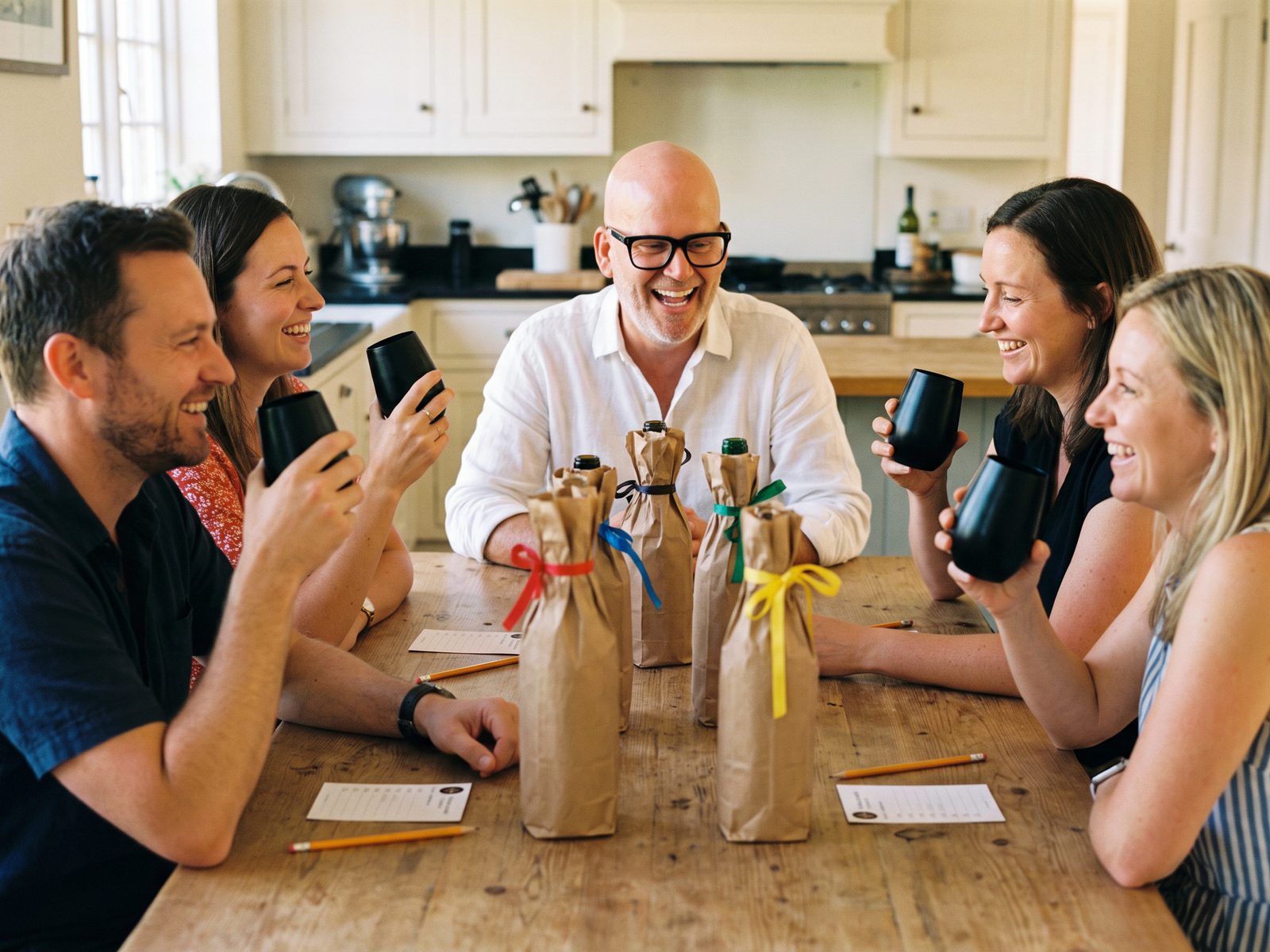
Why it works
A label tells you what to expect, and expectations change what you taste. Experiments with tasters have shown that the same wine, poured once from a grand label and once from a plain one, gets described quite differently. Hiding the bottle removes that, so people taste what is in the glass: the colour, the aroma, the acidity and the tannin.
Games also give a tasting a structure. Instead of an open bottle and polite comments, everyone has a question to answer: which grape, which village, which is the expensive one? Having to commit to an answer makes people look, smell and think harder, and the reveal is the best part of the evening.
Piemonte is ideal for this. The same grape, Nebbiolo, tastes different from one village to the next, Barbera and Dolcetto sit side by side on the same hills, and the classic wines are easy to find. A handful of bottles is enough for a game that people remember.
What you need
- Paper wine bags or foil: To hide each bottle and its shape.
- Numbered stickers or coloured ribbons: To mark each bottle and glass.
- Identical tasting glasses: Several per person, all the same shape.
- Black tasting glasses (optional): Opaque glasses for the red-or-white game.
- Tasting cards and pencils: One card per person with a line for each wine.
- Spittoon: A bucket, a jug or proper spittoons, one per two or three people.
- Aroma jars (optional): Small covered jars for the warm-up aroma round.
Step by step
- Choose a question for the evening Pick one game rather than mixing several. Good ones for a first time: guess the grape (Nebbiolo, Barbera, Dolcetto), Barolo or Barbaresco, or spot the expensive bottle. Four to six wines is plenty.
- Hide the bottles Have someone who is not playing open the bottles, remove the capsules and slide each one into a paper bag, a sock or wrap it in foil. Mark each bag with a colour or a number on a sticker. Write down which is which and keep the list out of sight. Tip: Different bottle shapes give the game away. Pour into numbered carafes if you want it truly blind.
- Serve them all at the right temperature Chill whites and sparkling, and bring reds to 16 to 18 °C. A warm wine tastes more alcoholic and a cold one more tannic, and that alone can make people guess wrong.
- Pour small, identical measures Pour 30 to 50 ml of each wine into the same kind of glass. Set the glasses out in order on a white sheet of paper with the numbers written next to them, so everyone can see the colours side by side.
- Give everyone a card Hand out a simple card with a line for each wine and a few prompts: colour, three aromas, acidity, tannin, finish and your guess. Writing it down makes people commit before the discussion starts.
- Taste in silence first Give everyone five quiet minutes to taste through the flight before anyone speaks. Then go round the table wine by wine. The first opinion out loud always pulls everyone else towards it.
- Reveal one at a time Unwrap the bottles in order and let people check their guesses. Talk about what gave each wine away: the pale colour and high tannin of Nebbiolo, the bright acidity and low tannin of Barbera, the soft, dark fruit of Dolcetto.
- Keep score, lightly A point for the right grape, a point for the right region or village, a bonus for the vintage within two years. A small prize, perhaps the best bottle of the evening, keeps it fun. The point is to taste more closely, not to win.
Games that work
Guess the grape: Dolcetto, Barbera and Nebbiolo side by side from the same area, ideally the same producer. The three main red grapes of the Langhe, and the clearest lesson in colour, acidity and tannin there is.
Barolo villages: three Barolos from the same vintage, one each from La Morra, Castiglione Falletto and Serralunga d'Alba. La Morra is usually the most perfumed and open, Serralunga the most powerful and tight. Can people put them in order?
Barolo or Barbaresco: pair a Barolo and a Barbaresco of the same vintage. Barbaresco is often a little more fragrant and approachable young, Barolo broader and firmer, but the overlap is real, which makes it a good game.
Spot the expensive one: three wines of the same grape at very different prices. It is humbling, and it is often the cheapest that wins the room.
Red or white in the dark: pour wines at cellar temperature into opaque black glasses and ask which are red. Without colour, a full white and a light red are surprisingly hard to tell apart.
Vertical and horizontal: a vertical is the same wine from several vintages, which shows what age and weather do. A horizontal is several producers from one vintage and one appellation, which shows the producer's hand.
An aroma round
Before the wines, fill small jars with things you will meet in Piemonte wines: dried rose petals, a cherry, a piece of liquorice, tar or tea leaves, a hazelnut, white peach, a sage leaf. Cover them, number them, and let people guess by smell alone. It wakes up the nose and gives everyone words for the tasting.
For a full aroma game with kits, blindfolds and a homemade Piemonte set, see Aroma kits and smell games.
If something goes wrong
Everyone guessed the same and got it wrong
The first person to speak led the room. Next time, make everyone write their guess before any discussion.
People could tell the wines apart by the bottle
Bottle shape, capsule colour and the punt give a lot away. Decant into numbered carafes or jugs before the guests arrive.
The flight was too hard
Choose wines that are further apart in style for a first game, and save the subtle comparisons, like Barolo villages, for a group that has played before.