Food for a wine tasting
The right food resets the palate between wines and shows how they behave at the table; the wrong food hides them. Here is what to put out, what to keep away, and the Piemonte classics that do both jobs.
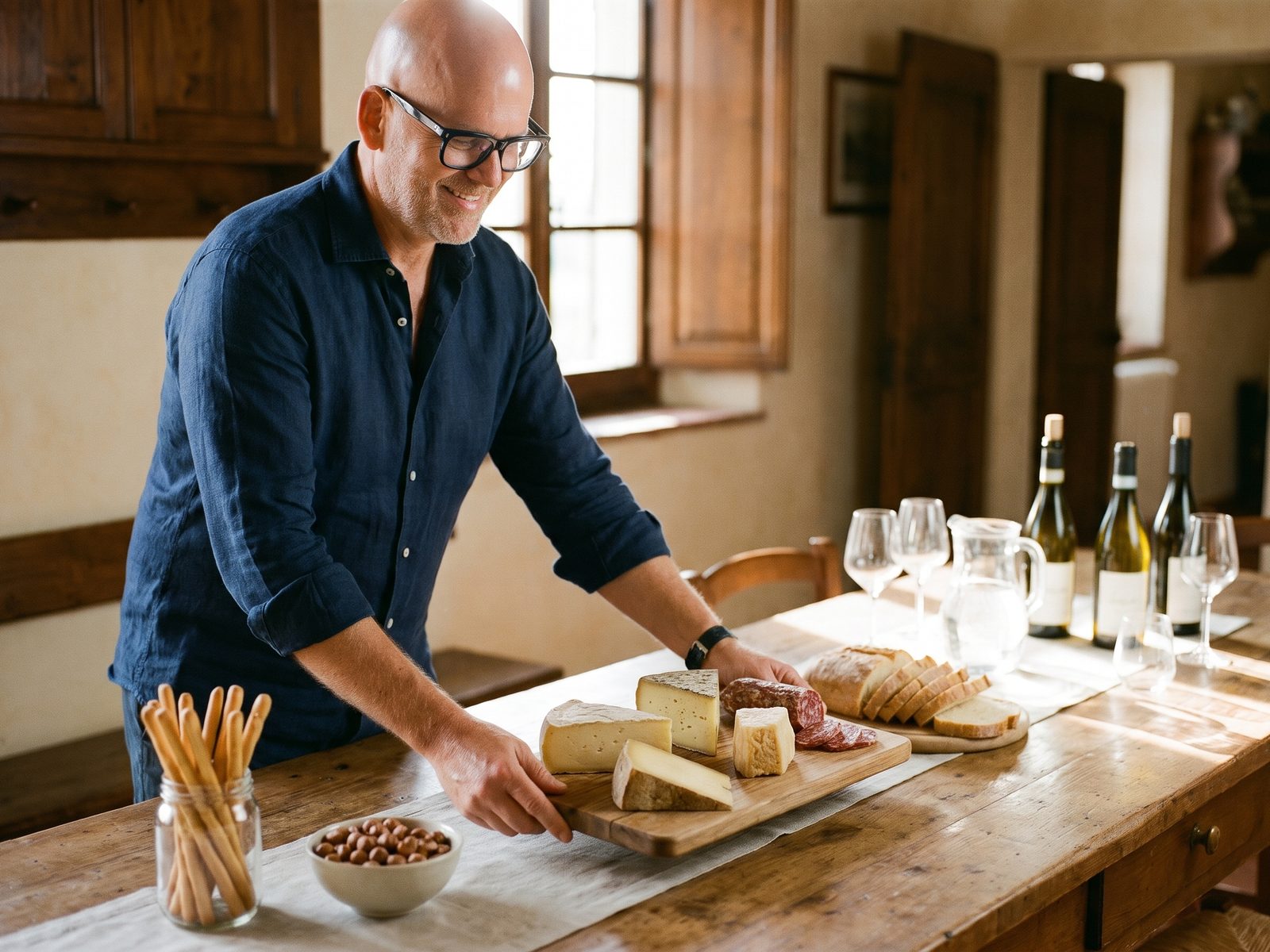
Why it works
At a tasting, food has two different jobs. The first is to reset your palate between wines: something plain and neutral that clears the last wine's tannin, acidity and sweetness so the next glass gets a fair hearing. The second is to show how a wine behaves with food, which is how most wine is drunk.
The neutral foods are bland on purpose: bread, grissini, plain crackers and water. Salt, fat and protein are the second tier. A little salt makes wine taste rounder and less bitter, fat softens tannin, and protein binds with it, which is why a tannic young Barolo that grips on its own turns smooth next to a piece of cheese or salame.
Some foods work against wine and are best kept off the table: strong spice, vinegar, citrus, chocolate, raw garlic and a few vegetables such as artichokes and asparagus. They make wines taste sour, metallic or thin, and at a tasting they mislead everyone.
What you need
- Water jugs: Still water at room temperature, about a litre per person.
- Spittoon (optional): For tasters who want to taste more without drinking more.
- All-purpose wine glasses: Identical glasses, so the food is the only thing that changes.
Step by step
- Start with neutral palate cleansers Put out plain bread, grissini and unsalted crackers on every part of the table, and still water in jugs. These are for between wines: a bite of bread and a sip of water, and the next wine starts clean. Tip: Grissini torinesi are Piemonte's own palate cleanser: dry, plain and easy to share.
- Add a few cheeses, mild to strong Choose two or three cheeses rather than a big board: a young, mild one like Toma or Robiola, a firmer aged one like Parmigiano or a mature Toma, and, if the wines are big, something with character like Castelmagno. Cut them into small pieces so people take a little.
- Add something salty and cured A few slices of salame, prosciutto crudo or bresaola give fat and salt that soften tannic reds. In Piemonte, salame cotto or salame di Turgia is the classic choice with Barbera and Nebbiolo.
- Put out a bowl of hazelnuts Toasted Piemonte hazelnuts, the Tonda Gentile of the Langhe, are mild, rich and a natural partner for Nebbiolo and sweet wines. Unsalted or lightly salted, never flavoured.
- Keep the strong flavours away Leave out spicy snacks, pickles and anything in vinegar, citrus, chocolate (unless you are tasting sweet wines), raw onion and garlic, artichokes and asparagus. Mint gum and coffee before a tasting dull the palate too.
- Match food to the flight For a white and sparkling flight, a mild cheese and grissini are enough. For a red flight, add the cured meat and an aged cheese. For sweet wines, finish with hazelnuts, hazelnut cake or a few biscuits.
- Taste each wine twice Taste each wine first on its own, with only bread and water between glasses. Then taste it again with a piece of cheese or salame. The difference is the most useful thing a tasting can teach.
The Piemonte tasting table
Grissini torinesi, Toma piemontese, Robiola di Roccaverano, Castelmagno, salame cotto, a few slices of lardo or prosciutto, Tonda Gentile hazelnuts and a jug of water. That is the table set out in many Langhe cellars, and it suits everything from Arneis to Barolo.
Write it down
Use the Il Vino Bello tasting notes sheet to note each wine on its own and with food. It has a page for one wine in detail and a flight sheet for six.
If something goes wrong
Everything tastes the same after a few wines
The palate is tired, usually from tannin. Slow down, take bread and water, and taste a white or a light red before going back to the big wines.
A red tastes harsh and bitter
Try it with a piece of aged cheese or salame. If it softens, the wine is simply made for the table rather than for sipping alone.