How to taste wine
Look, swirl, smell, sip, think. Five unhurried steps turn a vague impression into a wine you can describe, judge and remember.
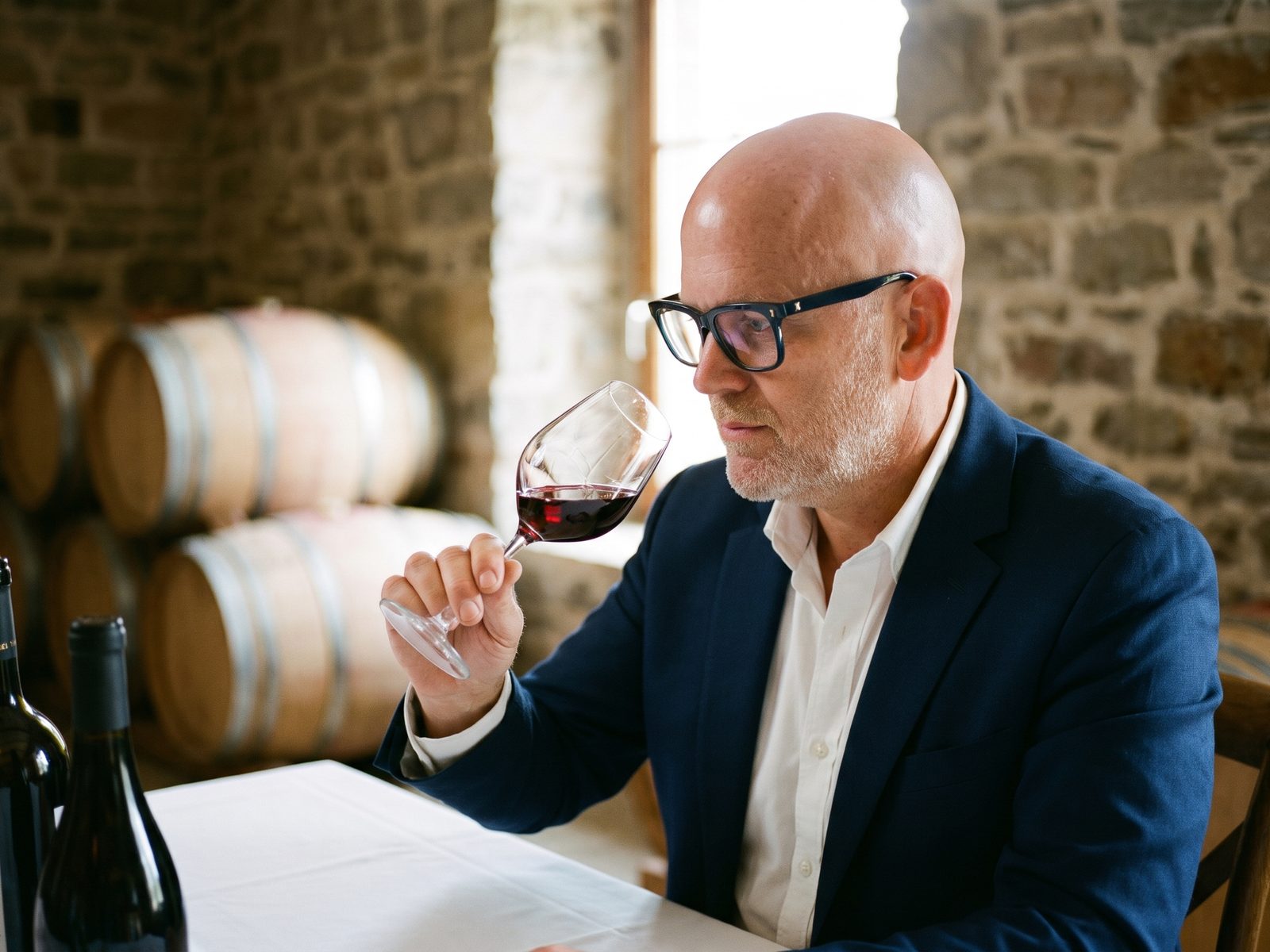
Why it works
Most of what you call taste is smell. Your tongue registers only sweet, sour, salty, bitter and umami. Everything else, the cherry, the violet, the toast, reaches you as aroma, either through the nose or from the back of the mouth up into the nasal cavity as you swallow. Tasting wine well means giving those aromas the best chance to reach you, then paying attention in a fixed order so nothing is missed.
Each step tells you something different. Colour hints at grape, age and winemaking before you smell anything. Aroma tells you about the fruit and what happened to it in the cellar. The mouth tells you about structure: sugar, acid, tannin, alcohol and body, which no amount of sniffing reveals. A Barolo and a Barbera can both smell of red cherries; one sip and the difference in tannin is unmistakable.
Your senses also tire quickly. The nose adapts to a smell within seconds and stops reporting it, which is why a second long sniff always seems weaker than the first. Tannin and alcohol build up on the palate over a few glasses. A routine of short sniffs, small sips, water and pauses keeps you sharp for longer.
Structure is also what makes wine work at the table. Acidity cuts through fat and tannin softens against protein. Once you can name what is in the glass, choosing a bottle for dinner stops being guesswork.
What you need
- Tulip-shaped glasses: Clear, thin and narrowing at the top so aromas gather in the bowl; one per wine if you can, or rinse with a splash of the next wine.
- White background: A napkin, plate or sheet of paper behind the glass makes colour and clarity easy to read.
- Spittoon: An ice bucket for the table or an opaque cup for each person.
- Still water and plain crackers: To rinse and reset the palate between wines.
- Notebook or phone (optional): For short notes you can find again next time you see the bottle.
- Aroma references (optional): Lemon, cherries, a vanilla pod, black pepper and a few mushrooms from the kitchen do the job of a boxed aroma kit.
Step by step
- Pour a small measure Pour about 50 ml, roughly a quarter of the bowl. That leaves room to swirl without spilling and gives the aromas space to collect. Hold the glass by the stem or base so your hand does not warm the wine or smear the bowl. Tip: Smell the empty glass first. Detergent or a musty cupboard will colour everything you pour into it.
- Look at colour and depth Tilt the glass to about 45° over something white and look at the core and the rim. White wines darken with age, from pale lemon towards gold and amber. Reds go the other way, from purple through ruby to garnet and brick, with the rim changing first. A deep, inky young red points to thick-skinned grapes such as Syrah or Cabernet Sauvignon; Nebbiolo is pale garnet with an orange edge even when young. A golden young white often means oak, skin contact or a warm vintage. Tip: Check clarity too. Haze can mean a fault or simply an unfiltered wine. Small glassy crystals in the bottom are tartrates: harmless, tasteless and a sign the bottle got cold.
- Swirl, then read the legs Swirl the glass for a few seconds. This spreads the wine into a thin film over the glass, and the larger surface lets more aroma molecules evaporate into the bowl. As it settles, drops called legs or tears run down the sides. They form because alcohol evaporates faster than water at the edge of the film, so more alcohol and more sugar give slower, thicker legs. They tell you nothing about quality. Tip: If swirling in the air feels risky, keep the base flat on the table and draw small circles.
- Smell in short sniffs Put your nose into the bowl and take two or three short, gentle sniffs, then pull away. Long deep breaths numb the nose within seconds. Look for broad families first: fruit, flowers, herbs, spice, wood, earth. Then narrow down. Red fruit or black? Fresh, ripe or dried? Is there anything beyond fruit, such as toast, butter or mushroom? Tip: Between wines, smell the inside of your forearm or sleeve. It is a familiar, neutral smell and resets the nose quickly.
- Sip and draw air through Take a small sip, about a teaspoon, and move it round your whole mouth so it reaches the tip, sides and back of the tongue and the gums. Then purse your lips and draw a little air in over the wine. It warms the wine and pushes aromas up the back of the throat to the nose. This retronasal smell is how you taste flavour, and it often shows notes the glass did not.
- Take the structure apart Judge each part on its own as low, medium or high. Sweetness shows on the tip of the tongue. Acidity makes your mouth water. Tannin dries the gums and leaves a grippy film on the teeth. Alcohol shows as warmth in the throat and chest. Body is the overall weight, like the difference between skimmed milk and cream. Use the table below until this becomes habit. Tip: Ripe fruit can fool you into thinking a dry wine is sweet. Pinch your nose and sip: without aroma, real sugar still shows.
- Spit or swallow, then count After the wine has gone, count the seconds its flavour stays. Count flavour, ignoring any acid tingle or alcohol burn. Under five seconds is short; ten or more is long, and great wines linger for much longer. Notice whether the finish stays pleasant or turns bitter or hot.
- Decide what you think Pull it together with four questions, often shortened to BLIC. Balance: do acid, tannin, alcohol and sweetness sit in proportion with the fruit, or does one stick out? Length: how long the finish lasts. Intensity: how clearly the wine speaks on nose and palate. Complexity: how many distinct aromas there are, and whether they change in the glass. A wine that does well on all four is good, whether or not you like it; liking it is a separate and equally valid question. Tip: Come back to the glass after 20–30 minutes. Good wines often open up with air; tired ones fade.
Run a tasting at home
Pick a theme so the wines teach you something: one grape from different places, such as Nebbiolo from Langhe, Barolo and Valtellina; one region at three prices; or one wine from a young and an older vintage. Four to six wines is plenty. A bottle gives about fifteen 50 ml pours.
Taste sparkling before still, white and rosé before red, light before full, dry before sweet, and young before old. Each wine should be no more powerful than the one after it, so it does not mask what follows. Serve whites at 8–12 °C and reds at 15–18 °C.
Tasting blind removes the label's influence. Wrap the bottles in foil or paper bags, number them, and write notes before you reveal.
For blind tastings, guess-the-grape rounds and a Barolo village flight, see Tasting games.
Keeping notes that help
A good note is short and lets you recognise the wine again. Write the producer, wine, vintage and price, then one line each for look, nose and palate, and a verdict. Rating structure as low, medium or high is more useful than hunting for adjectives.
Add context: where you drank it, what you ate, how long the bottle had been open. A Barbera that seemed sharp on its own and perfect with tajarin al ragù tells you more about food than any score. Note whether you would buy it again, and at what price.
A photo of the label saves copying. Read your old note before you taste a wine again, then compare.
If something goes wrong
Everything just smells like 'wine'
That is normal at first. Your nose picks up the smells; you just lack names for them yet. Start with broad families, then train with the real thing: sniff a lemon, a cherry, a vanilla pod and some mushrooms, and go back to the glass. Two contrasting wines side by side, say a Sauvignon Blanc and an oaked Chardonnay, make differences jump out.
I can't tell tannin from acidity
Both feel sharp, so they are easy to confuse. Acidity makes you salivate: after swallowing, your mouth floods. Tannin does the opposite and dries it, most of all on the gums above your top teeth. Practise with black tea brewed for five minutes for tannin, and water with a squeeze of lemon for acid.
Is this bottle corked?
Cork taint comes from TCA, a compound mould makes from chlorine-based residues, and it smells of damp cardboard, wet dog or a musty cellar. A light dose just flattens the fruit, so the wine seems dull rather than obviously off. If you are unsure, compare with another bottle of the same wine. Screwcapped wines are rarely affected, and a shop or restaurant should replace a corked bottle.
It smells of vinegar, bruised apple or rotten eggs
Vinegar or nail-polish remover means volatile acidity from bacteria; a trace adds lift, a lot is a fault. Bruised apple, flat nuttiness and browning in a young wine mean oxidation, from a poor seal or a bottle open too long. Rotten egg, struck match or cooked cabbage is reduction, sulphur compounds formed without air; swirl hard or decant and it often clears in minutes. Stewed, jammy fruit with a raised cork or sticky capsule points to heat damage in storage.
My mouth is tired after a few wines
Tannin, acid and alcohol build up and dull your palate. Sip still water between wines, eat a plain cracker or some bread, and spit rather than swallow. Keep a session to six or eight wines, and put the biggest, most tannic reds last.
My notes sound nothing like the back label
Use your own words. If a wine reminds you of your grandmother's jam cupboard or wet stones after rain, that is a precise description for you, and it will help you recognise the wine again.