Aroma kits and smell games
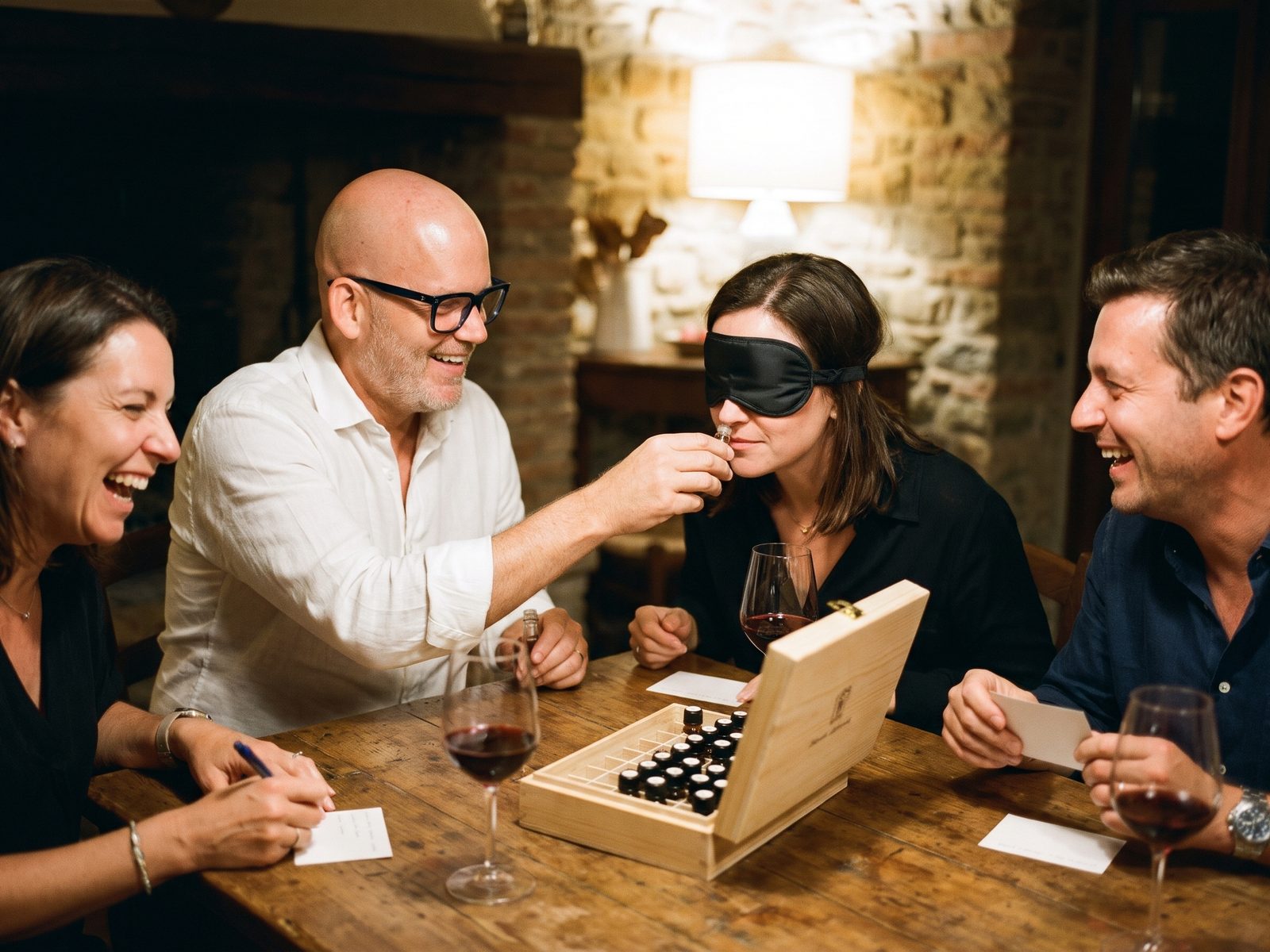
A box of little vials, a blindfold and a few friends: guessing the smells in wine is far harder than anyone expects, and it is one of the most fun things you can do at a wine evening. Here is how to play, and how to make your own Piemonte kit.
Why it works
Most of what we call taste is smell. The tongue picks up sweet, sour, salty, bitter and savoury; everything else in a wine, the cherry, rose, tar or honey, reaches you through the nose, both when you sniff and as the wine warms in your mouth. Train the nose and you taste more.
Naming smells is surprisingly hard, even for familiar ones. People often recognise a smell straight away but cannot find the word for it, a well-known tip-of-the-nose feeling, until someone says "vanilla" or "pepper" and it suddenly seems obvious. Without the sight of the thing, the brain struggles to link the smell to its name.
Aroma kits make that link trainable. Each small vial holds a single reference aroma, such as blackcurrant, violet, leather or toast, that you might find in wine. Smelling them blind and naming them, then checking the answer, slowly builds a vocabulary you can bring to the glass. And because almost everyone gets them wrong at first, it makes a very good game.
What you need
- Wine aroma kit: Numbered vials of reference aromas with an answer booklet; 12 to 24 aromas are plenty for a game.
- Blindfolds: Soft sleep masks, so sight gives nothing away.
- Cards and pencils: One card per player to write guesses before anyone speaks.
- Smelling strips (optional): Paper strips for strong or oily aromas.
- Small covered jars (optional): For a homemade kit from the kitchen and garden.
- Sand timer (optional): Thirty seconds per vial for the team game.
- Black tasting glasses (optional): For matching aromas to wines without seeing the colour.
Step by step
- Get a kit, or make one Wine aroma kits are widely sold, from small sets of 12 vials to large collections of 54 or more, often split into red wine, white wine and faults. A starter kit of 12 to 24 aromas is plenty for a game. To make your own, see the Piemonte kit below. Tip: Keep vials closed and cool when not in use; the aromas fade faster in warmth and light.
- Number the vials and hide the answers Most kits come with numbered vials and an answer booklet. Keep the booklet with the host. If you make your own, number the jars on the bottom and write the key on a card.
- Choose eight to twelve aromas A round of eight to twelve is enough; noses tire quickly. Mix easy ones (lemon, vanilla, coffee) with harder ones (violet, liquorice, leather) and a couple that belong to the wines you are pouring tonight.
- Smell with your eyes closed, or blindfolded Sight is the strongest clue, so take it away. Hold the vial a few centimetres below the nose, take two or three short sniffs and move on. Smelling strips dipped in the aroma work well for oily or strong aromas.
- Write before you speak Give everyone a card. Each player writes a guess for each number before anyone says anything out loud; the first guess spoken always steers the room.
- Rest the nose between rounds After four or five aromas, pause. Smell the back of your own hand or wrist, take a sip of water and give it a minute. The nose recovers quickly but tires just as fast.
- Reveal and talk about it Read out the answers one by one. Ask where people have met each smell, and which wine it belongs to. The moment of "of course, that is it" is the whole point of the game.
- Then go back to the wine Pour the wines and look for the aromas you have just learned. A Nebbiolo that smelled of "red wine" an hour ago now smells of rose, cherry and tar.
Games to play
Blind sniff round: eight vials, blindfold on, one point for each correct aroma and half a point for the right family, such as citrus instead of grapefruit.
Aroma bingo: give everyone a card of nine aromas. Pass the vials round in random order; the first to tick a line, correctly, wins.
Match the wine: pour three wines and set out six vials. Which aromas belong to which wine? Nebbiolo, Moscato and Arneis make a clear set.
Team relay: two teams, one vial at a time, thirty seconds on the sand timer to agree an answer. Arguments are part of the fun.
Make a Piemonte aroma kit
You can build a kit for the wines of Piemonte from the kitchen and the garden, in small covered jars: dried rose petals and a violet sweet for Nebbiolo; a cherry and a piece of liquorice root, and a little tar from a strong black tea such as lapsang souchong, for Barolo and Barbaresco; sour cherry and plum for Barbera; bitter almond for Dolcetto; white peach, sage and elderflower for Moscato; a hazelnut, a slice of pear and acacia honey for Arneis and the sweet wines; a fragment of truffle, or a mushroom, for old Nebbiolo.
Refresh fruit and herbs on the day, and cover each jar with foil or a cloth so nobody can peek. Number them on the bottom.
Write it down
The Il Vino Bello tasting notes sheet has an aroma checklist on the first page, useful once you move from the vials to the glasses.
If something goes wrong
Everyone is getting everything wrong
Completely normal. Give a clue, such as the family (fruit, flower, spice), or offer three choices per vial. Most people improve quickly once they have smelled each vial with its name.
The aromas all smell the same after a while
The nose is tired. Stop, smell your own wrist, drink some water and wait a few minutes. Shorter rounds help.
The homemade jars are too weak or too strong
Use fresh, slightly bruised fruit and herbs for more aroma, and only a pinch of strong spices. Test each jar yourself before the guests arrive.