Wine glasses: shapes, care and storing
The glass is the last tool between the bottle and your nose. Which shapes are worth owning, how much to pour, and how to wash, polish and store glasses so they never get in the way of the wine.
Why it works
A wine glass does three jobs. The bowl gives the wine a surface to release its aromas when you swirl. The rim, narrower than the bowl, gathers those aromas and points them at your nose. And the stem keeps your warm hand away from the wine and your fingerprints off the bowl, so you can see the colour.
Shape changes how a wine comes across. A big, wide bowl gives a delicate, aromatic red like Nebbiolo room to open and spreads its scent over a large surface. A smaller bowl keeps a white wine cool and its aromas focused. A tall, tapered glass for sparkling wine lets the bubbles rise in a fine line. The differences are real but not dramatic: a good all-purpose glass serves almost every wine well.
Clean glass matters more than the right shape. A film of detergent, a cupboard smell or a hint of rinse aid flattens aroma and kills the bubbles in sparkling wine. Much of looking after glasses comes down to keeping them free of anything that is not wine.
What you need
- All-purpose wine glasses: A tulip-shaped glass of 400 to 500 ml with a thin rim; six of them to start.
- Large-bowled Nebbiolo glasses (optional): 650 ml or more, for Barolo and Barbaresco.
- Tulip sparkling glasses (optional): More room for aroma than a flute.
- Champagne flutes (optional): For toasts and showing off the bubbles.
- Bordeaux glasses (optional): A tall bowl for big, tannic reds.
- White wine glasses (optional): A smaller bowl that keeps whites cool and focused.
- Dessert wine glasses (optional): Small glasses for Moscato passito, Barolo Chinato and other sweet wines.
- ISO tasting glasses (optional): The standard tasting glass, for comparing wines side by side.
- Microfibre polishing cloth: Lint-free, kept only for glasses.
- Glass drying rack (optional): Lets glasses drip dry upside down without resting on the rim.
- Stemless tumblers (optional): Sturdy and casual; they warm the wine faster.
Step by step
- Start with one good all-purpose glass Buy six of a tulip-shaped glass of about 400 to 500 ml, with a thin rim and a bowl that narrows towards the top. It serves sparkling, white, rosé and most reds well. If you only own one kind of glass, make it this one. Tip: Thin glass at the rim makes a surprising difference: the wine flows onto the tongue instead of over a thick lip.
- Add large bowls for Nebbiolo If you drink Barolo, Barbaresco or other Nebbiolo often, add a set of large-bowled glasses of 650 ml or more, the shape often sold for Pinot Noir or Burgundy. The wide bowl lets the wine's rose, tar and cherry aromas open and softens the impression of its tannin.
- Choose a tulip over a flute for good sparkling wine A flute shows off the bubbles but leaves little room for aroma. A tulip-shaped sparkling glass, or simply your all-purpose glass, gives an Alta Langa or Champagne more space to smell of what it is. Keep flutes for toasts.
- Hold the glass by the stem Hold the stem between thumb and fingers, or the foot if you are tasting. Your hand on the bowl warms the wine quickly and smudges the glass, so you cannot judge the colour. Stemless tumblers are fine for casual meals, but they warm the wine.
- Pour a third of a glass Fill a wine glass to about a third, roughly at the widest part of the bowl. In a large Nebbiolo glass that is a quarter. The empty space above the wine is where the aromas gather, and it lets you swirl without spilling.
- Wash with hot water and very little detergent Rinse glasses as soon as you can after use, then wash in hot water with a drop of mild detergent at most, and rinse thoroughly in hot water. Residue is the enemy: it leaves a smell, a film and flat sparkling wine. If your glasses are dishwasher safe, use a gentle cycle, the top rack, little detergent and no extra rinse aid.
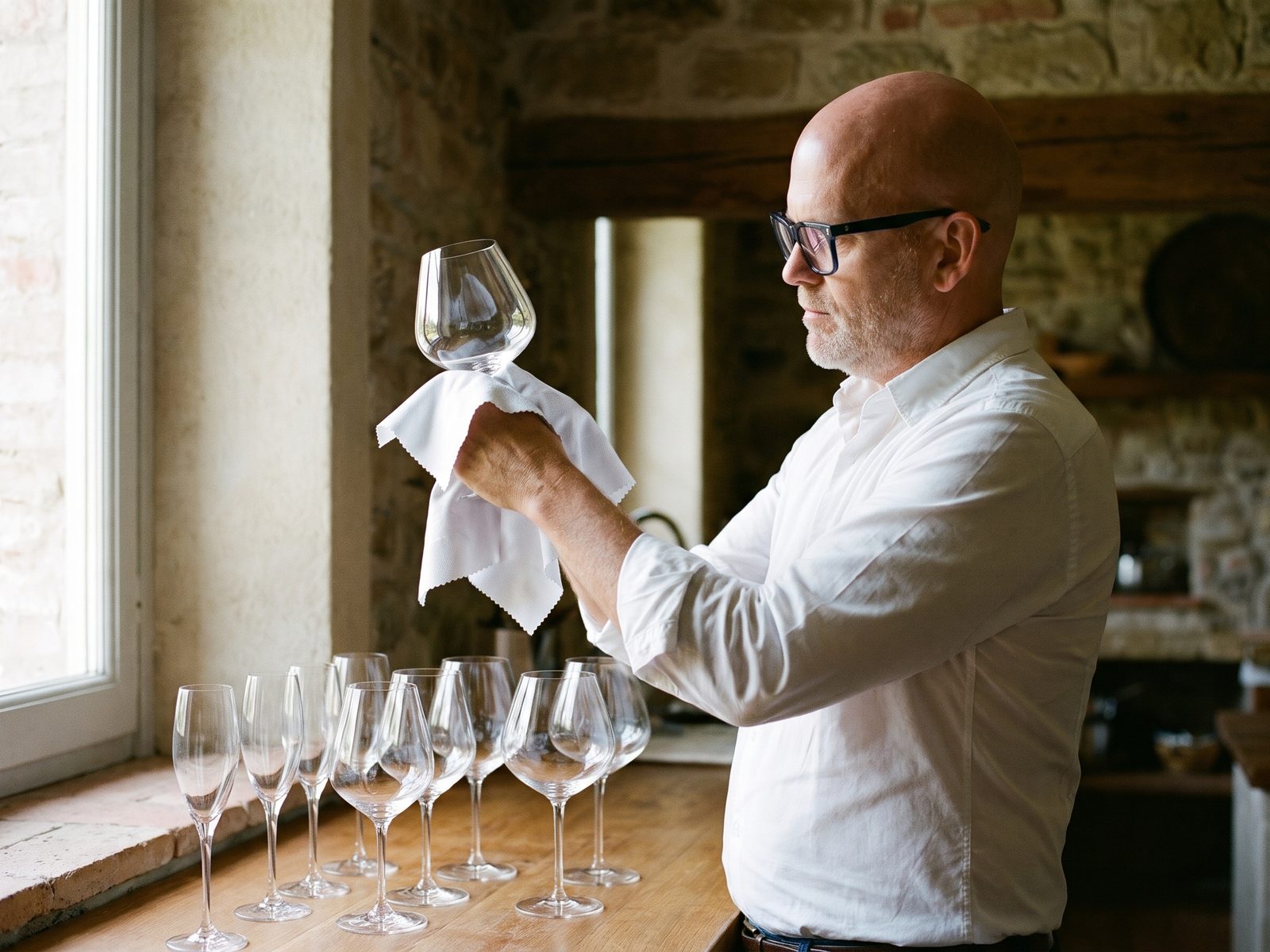
- Polish while they are still warm Polish with a lint-free microfibre or linen cloth while the glass is warm and damp. Hold the glass by the bowl, not the foot, and never twist the bowl and the foot in opposite directions: that is how stems snap. For stubborn spots, hold the glass over the steam of a kettle for a second and polish again. Tip: Keep one cloth only for glasses. Cloths washed with fabric softener leave a film.
- Store them upright in a closed cupboard Store glasses standing on their foot in a closed cupboard. Upside down on the rim, they trap stale cupboard air inside the bowl and the delicate rim takes the knocks. Before a special bottle, give each glass a quick sniff: if it smells of the cupboard, rinse it with a splash of the wine.
Does the glass really change the wine?
Partly. The shape of a glass changes how much aroma reaches your nose and how quickly the wine warms, and in tastings people do describe the same wine differently from different glasses. But the effect is smaller than glass makers suggest, and a clean, thin, tulip-shaped glass captures most of it. Spend on more good all-purpose glasses before you spend on a glass for every grape.
Glasses for a Piemonte evening
For a dinner with Alta Langa, Arneis, Barbera and Barolo, two glasses per guest are enough: an all-purpose tulip for the sparkling, the white and the Barbera, and a large bowl for the Barolo or Barbaresco. Rinse the tulip with a splash of the next wine between bottles. See A wine evening with friends for the rest of the plan.
Crystal or glass?
Most fine wine glasses today are lead-free crystal, made with titanium, zinc or magnesium instead of lead. It can be blown thin and still be strong, and much of it is dishwasher safe. Ordinary soda-lime glass is cheaper, thicker and sturdier, and perfectly good for everyday wine. Old lead crystal decanters are fine for serving, but do not keep wine or spirits in them for days, because lead can leach into the liquid over time.
If something goes wrong
My glasses have gone cloudy
If the cloud wipes off with a little white vinegar, it is limescale from hard water: soak for a few minutes in warm water with vinegar, rinse and polish. If it does not wipe off, the glass is etched by the dishwasher, which cannot be undone. Wash those by hand from now on, or use a gentler cycle and less detergent.
The bubbles in my sparkling wine die quickly
Usually detergent or rinse-aid residue in the glass. Rinse the glasses again in hot water and polish them. A glass that is too clean is rarely the problem: a few tiny marks on the inside actually help bubbles form.
The wine smells of cardboard or the cupboard
The glass has picked up the smell of its storage. Rinse it with water, or swirl a small splash of the wine round the bowl and pour it away, then pour the wine. Store glasses upright from now on.