Decanting young wine
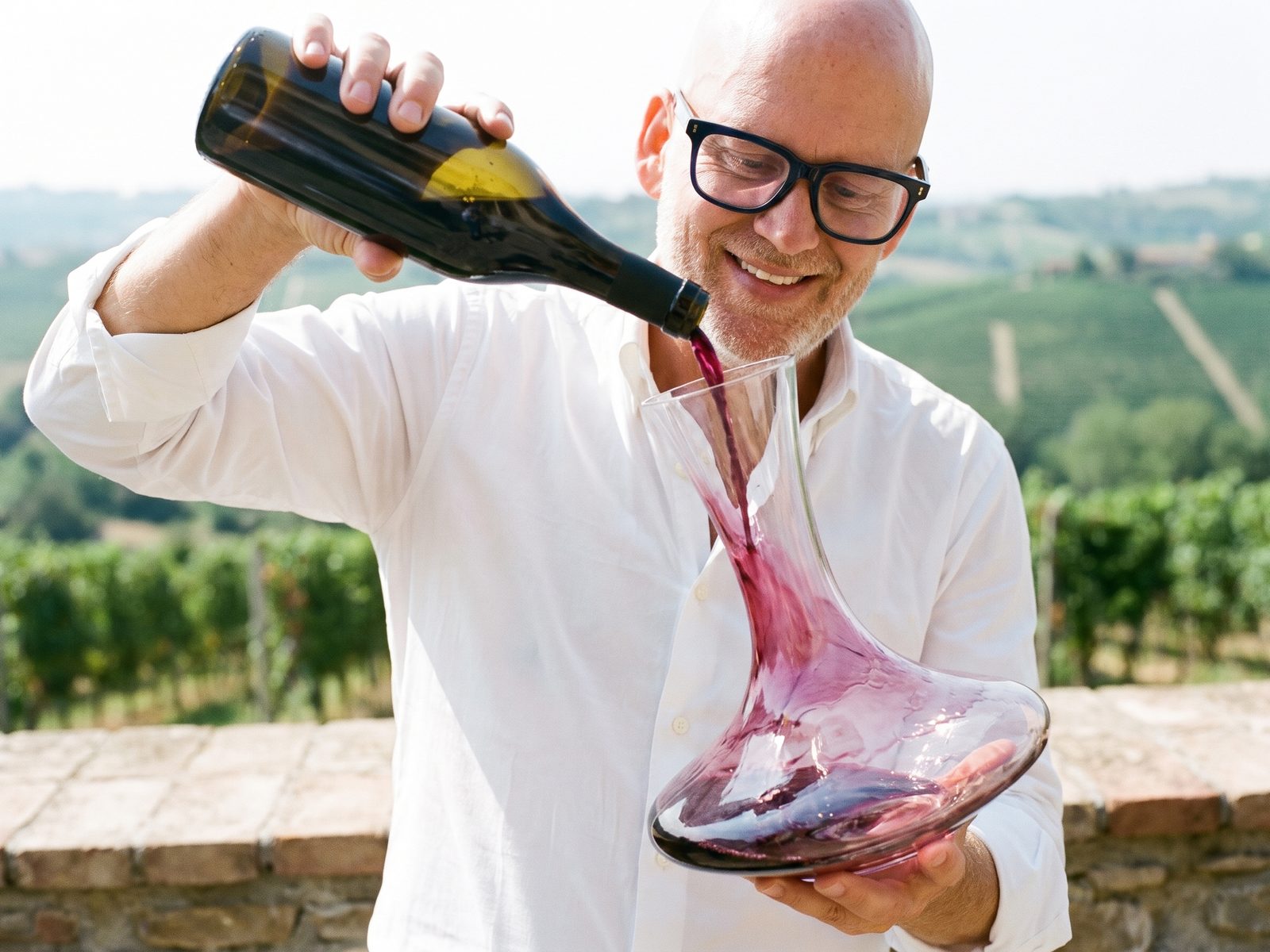
A young Barolo, Barbaresco or big Barbera can taste tight and closed straight from the bottle. A brisk pour into a wide decanter and an hour or three of air bring out the fruit and soften the edges.
Why it works
The second reason is air. Wine is bottled with very little oxygen, and young wines, especially those made and aged with little air contact, can open with a whiff of struck match, rubber or rotten egg. These are volatile sulphur compounds, and the lightest of them, such as hydrogen sulphide, simply evaporate once the wine is spread thin across a large surface. With them gone, the fruit and floral aromas they were masking come forward. Dissolved carbon dioxide escapes too, and since CO2 sharpens the taste of both tannin and acidity, the wine feels rounder. A big red usually also warms a degree or two in the decanter, which helps the aromas lift.
What an hour or two of air does not do is chemically transform the tannins. That takes years in bottle, and most of the softening you notice is the change in aroma and carbon dioxide, which shapes how you perceive the tannin. Air also cannot fix a faulty wine. A corked bottle, with its smell of damp cardboard, stays corked. A wine that is already oxidised, tasting of bruised apple and sherry, only gets worse. And a thin, simple wine does not become a rich one.
Pulling the cork and leaving the bottle standing does very little, because the surface of wine exposed in the neck is the size of a coin. A decanter spreads the same wine across a surface many times wider, and the pour itself splashes air through it. That is why the vessel matters.
What you need
- Wide ship's decanter: A broad flat base gives the wine the most air.
- Waiter's friend corkscrew: Young corks are firm and easy.
- Aerating funnel (optional): Showers the wine into the decanter for even more air.
- Plain carafe (optional): Any clean jug does the job if you have no decanter.
- Wine thermometer (optional): Keeps an eye on the temperature as the wine warms.
- Decanter cleaning beads and drying stand (optional): Clean the decanter without scratching it.
Step by step
- Decide why you are decanting Look at the wine before you do anything. An old red or a vintage port is a sediment job: gentle handling, minimal air, serve soon after. A young, tannic or slightly sulphurous wine is an air job: a vigorous pour into a wide decanter, then time. Most everyday wines need neither. Tip: If you are not sure, open the bottle and taste a small glass. A wine that smells muted or of struck match will gain from air; one that already smells open and expressive can be poured straight away.
- Open the bottle and taste a splash Open the bottle and pour a small taste. If it smells of struck match or rubber, or the fruit seems hidden behind hard tannin, it will benefit from air. If it is already open and fragrant, serve it as it is.
- Choose a wide decanter Use a decanter with a broad, flat base, often called a ship's decanter. Spread across the base, the wine has many times more surface touching the air than in the bottle neck.
- Pour briskly, down the sides Hold the bottle a little higher than for an old wine and pour steadily so the wine fans out in a sheet down the inside of the decanter. The splash and the thin film are what bring the air in. Young wines rarely have sediment, so there is no need for a light. Tip: A funnel that spreads the wine into a shower, an aerating funnel, does the same job in a narrow decanter.
- Swirl the decanter now and then Every half hour, give the decanter a gentle swirl to move fresh wine to the surface.
- Double decant if you want the label on the table Rinse the empty bottle well with water to remove the sediment, drain it, then pour the wine back in from the decanter through a funnel. Your guests see the label, and the young wine gets a second dose of air. You can also re-cork it at this point to hold back an old wine that is opening too fast.
- Time it and taste as you go Use the table below as a starting point, then trust your glass. Pour a small taste every 30 minutes for young wines. When the aromas are open and the tannins feel smooth rather than drying, it is ready, and you can slow things down by moving the wine back into the bottle. Tip: Remember temperature. A decanter on a warm dining table creeps upwards; if you are decanting a red for two hours, start it a little cool, around 15 °C, so it is at 16–18 °C when you pour.
- Watch the temperature In a warm room a decanter of red wine climbs a degree or two an hour. If you decant hours ahead, start a little cool, at about 15 °C, so it reaches 16 to 18 °C when you serve.
Young Barolo and Barbaresco
In the Langhe, decanting Barolo is everyday common sense, because Nebbiolo is a grape of contradictions. It looks pale, often garnet with an orange rim even when young, yet it carries more tannin and acidity than most red wines in the world. A young Barolo, released after at least 38 months of ageing, 18 of them in wood, can taste hard and closed on the day it is opened, with the famous tar and roses only hinted at.
For a Barolo under about ten years old, decant it vigorously into a wide decanter two to three hours before dinner, and taste along the way. The more traditional producers, with long macerations and big old casks, often make the firmest wines and reward the longest wait. Serve at 16–18 °C in large glasses, alongside something that matches its weight: brasato al Barolo, a plate of tajarin with butter and white truffle in autumn, or aged cheeses.
Decanting without a decanter
Any clean glass jug, water carafe or large kilner jar does the same job. Rinse it with water first and sniff it to make sure it smells of nothing; a jug that held juice or a jar that held pickles will flavour the wine. For a sediment pour, the vessel only needs to be clean and see-through enough to check the wine.
For a young wine in a hurry, pour it from one jug into another four or five times, then back into the bottle. A pourer-style aerator, which draws air into the stream as you pour, gives a noticeable lift in seconds and is useful for single glasses. Swirling in a large glass does the same on a small scale, which is why tasters do it.
Some people blitz young red wine in a blender for 20–30 seconds. It does open a tight wine quickly, but it is rough on the delicate aromas and whips the wine into a foam that takes a few minutes to settle. Keep it for a stubborn young bottle you need to drink tonight, never for anything old.
If something goes wrong
The wine still seems closed after two hours
Some young Nebbiolo and Cabernet need longer, and some wines pass through a dumb phase in bottle when little shows however much air you give them. Pour it back and forth between two clean vessels a few times, check it is not too cold, and give it another hour. If nothing changes, it simply needs more years.
The wine tastes flat and tired after decanting
It had too much air for its age, or it warmed up too much. Old wines can fade within an hour, so decant them just before serving. Pour what is left back into the bottle and cork it, and chill the decanter briefly if the wine has gone above 18 °C.