Tenute Sella: Sea Sands, Red Porphyry and Lessona Since 1671
Since 1671 the Sella family has farmed Nebbiolo in Lessona, then Bramaterra: two hills, two soils and a run of history in Alto Piemonte.
Il Vino Bello ·
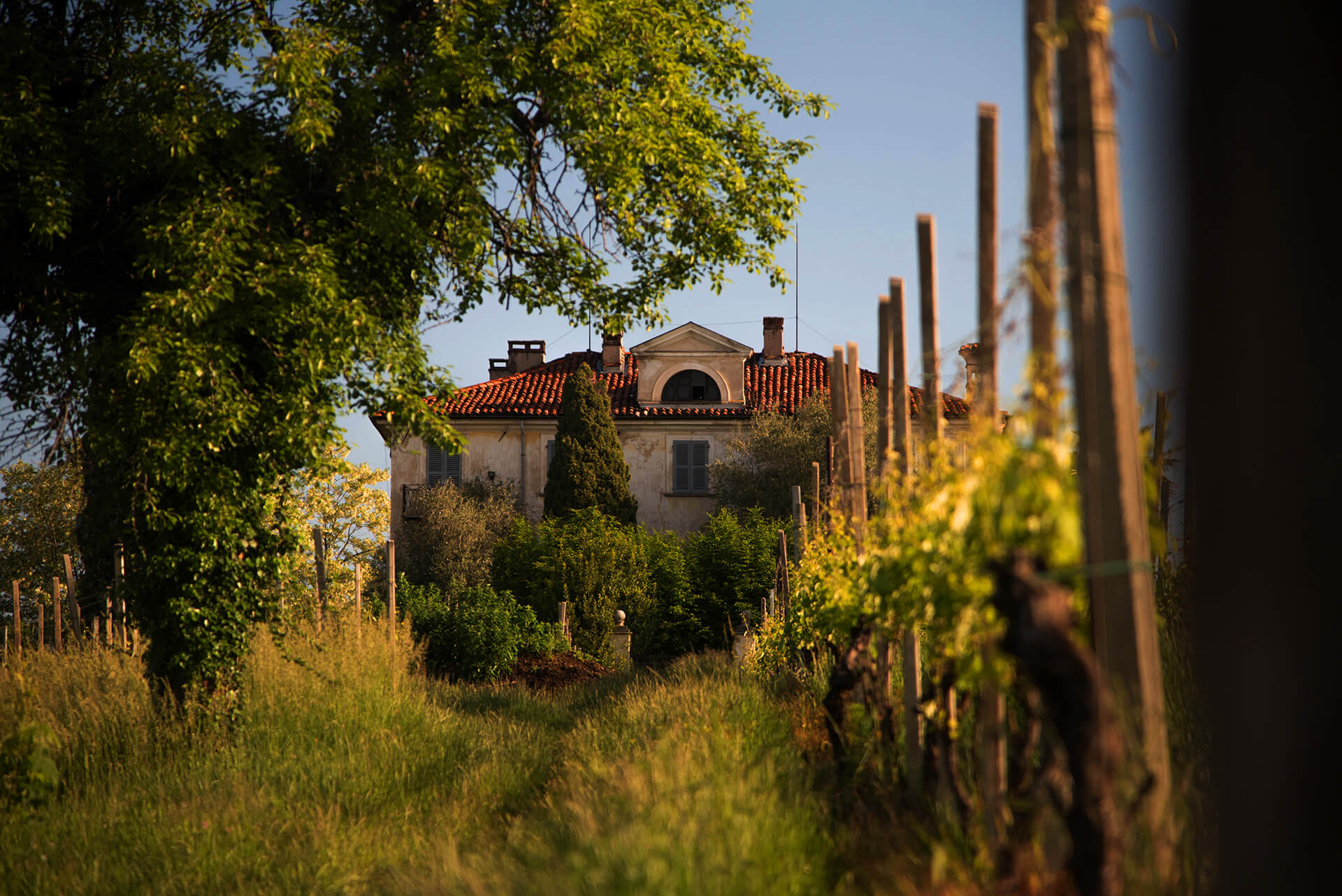
Most Nebbiolo lovers know the Langhe by heart. Fewer have gone north to the wooded hills near Biella, in Alto Piemonte, where Tenute Sella has been making wine in Lessona since 1671. The family's story runs through Italian history, and its two estates show how much the ground under Nebbiolo can change in a few kilometres.
A textile family buys a vineyard
The Sella story starts with cloth, not grapes. The family's own timeline dates its textile business to 1570, and in 1671 a notarial deed records Comino Sella buying vines in Lessona as an investment of spare cash from that trade. Over the next two centuries his descendants kept buying vineyard land in the village. One hill had a longer history still: the estate says a deed of 1436 records a vineyard at a place called "al Zoppo", which is still part of the property.
In the 1830s and 1840s Giovanni Giacomo Antonio Sella built the family villa and farm buildings on the top of that Zoppo vineyard. Around 1870, when Maurizio Sella's estate was divided among his three sons, Giuseppe Venanzio took Lessona. One of his brothers was Quintino Sella, scientist, founder of the Club Alpino Italiano in 1863 and Minister of Finance, who, the family says, offered Lessona for the toast to Italian unity in 1870.
From Lessona to Bramaterra
Between 1882 and 1884 Carlo Sella, acting for Giuseppe Venanzio's heirs, bought plot after plot of a rough, wooded property called Bramaterra from the commune of Villa del Bosco, a few kilometres east. A priest and scientist, Don Paolo Antoniotti, was put in charge of clearing it, and in 1892 and 1893 the Cascina Bramaterra farmhouse went up to a design by Gaudenzio Sella. By the start of the twentieth century the vines were producing, and the wine took the property's name.
Prizes followed: a gold medal diploma in Milan in 1902, confirmed in Turin in 1928, and in 1941 the national wine commission placed Lessona among Italy's most prized wines. In 1968 Mario Soldati visited with Venanzio, Maurizio and Fabrizio Sella and wrote in Vino al vino of "pure fragrance, pure effluvium, pure spirit" (our translation). Venanzio, who ran the estate from the 1930s to the mid 1980s, took an active part in the push for the DOC, granted to Lessona by a decree of December 1976 and to Bramaterra in 1979. In 1980 the two estates were merged and production moved to the cellar in Lessona.
Sea sand and volcanic rock
What makes a visit here worthwhile is how different two neighbouring hills can be. Lessona's vineyards sit on Pliocene sands left by an ancient sea, yellow-orange and very free-draining, with a pH of 4.2 to 5.5 that the estate calls among the most acidic in European viticulture. Biella, 15 kilometres away, gets about 1,500 millimetres of rain a year; Lessona gets a little over 1,000, so summer rain matters on sands that hold so little water. The DOC covers only the commune of Lessona and asks for at least 85 percent Nebbiolo, with Vespolina and Uva Rara allowed for the rest.
Bramaterra, by contrast, sits on red quartz porphyry of volcanic origin, dating back to the Permian, in a belt of hills covered in oak, chestnut and birch. The Sella vineyard there is a single block of about 20 hectares between 270 and 350 metres, which the family describes as one of the largest single-owner vineyards in Alto Piemonte. Gambero Rosso, writing about Lessona in 2024, summed up the family's two terroirs this way: the Lessona wines more aromatic and open, the Bramaterra wines more robust and tannic. In both, nearly all the work is done by hand, the soil is worked at most once a year, usually in early winter, and the vines are fed with manure and mown grass to keep nitrogen down.
The wines to look for
The Lessona is the house classic: Nebbiolo with a little Vespolina from the estate's Lessona parcels, macerated for about 24 days and aged 24 months in French oak, in 50 hectolitre casks and barriques. Two selections come from the old vines of the home hill. San Sebastiano allo Zoppo, first made in 1993, is picked in the second half of October, macerates for around 45 days and spends 36 months in oak. Omaggio a Quintino Sella, first made in 1999, is the estate's principal label and is bottled only in the vintages the family considers best.
From the porphyry, the Bramaterra blends Nebbiolo with Croatina and Vespolina; the estate traces its first vintage to 1902 and the name to a document of 1447. I Porfidi, first made in 2003, comes from the highest hill of the property, a vineyard the estate dates to 1933 and that sits on a vein of pure red-brown porphyry; the three grapes are vinified separately and blended.
The range goes beyond the long-aged reds. Orbello is a young Coste della Sesia Nebbiolo made since 1980, and Majoli is Nebbiolo pressed gently, with no skin contact beyond the press, for a fresh, light-footed style. There are two Nebbiolo sparklings, the bottle-fermented Insubrico, 36 months on the lees, and the pink Clementina, plus an Erbaluce, Doranda, and a Riesling from Brusnengo, Piandoro.
Visiting
Visits are by appointment at the cellar on Via IV Novembre in Lessona, booked through the form on the estate's website. There are three formats: a cellar visit with a guided tasting of four wines (one hour, 25 euro), the same with six wines (an hour and a half, 35 euro), and a two-hour visit that adds the vineyard, eight wines and a board of local cured meats and cheeses (50 euro).
Lessona is a small denomination, so taste the Sella wines next to their neighbours': on our site there is Lessona from Massimo Clerico, Pietro Cassina and La Prevostura, and Bramaterra from Le Pianelle in Brusnengo.
Sources
- https://tenutesella.it/storia/
- https://tenutesella.it/tenute/
- https://tenutesella.it/degustazioni/
- https://tenutesella.it/wp-content/uploads/tenutesella.pdf
- https://www.regione.piemonte.it/web/media/6454/download
- https://www.gamberorossointernational.com/?p=521417