Malvirà: Arneis, Tarot Cards and Three Generations in Canale
The Damonte family's Roero estate, from the 1478 record of Arneis at Renesio to a Barolo in La Morra and rooms next to the cellar.
Il Vino Bello ·
The old 19th-century building in the centre of Canale had one odd feature: its courtyard faced north, not south as rural tradition prescribed. The building was called Malvirà, and in the mid-1970s the Damonte family named their winery after it. Fifty years on, Malvirà is one of the clearest ways into the Roero, the hills across the Tanaro from Alba where Arneis and Nebbiolo grow in sandy, fossil-rich soils.
Three generations in Canale
The story starts in the 1950s, when Giuseppe Damonte began making wine in the family cellar with, in the estate's words, a dream "to bottle the soul of the land that he loved." It was Giuseppe who decided to replace the family name with Malvirà. In 1989 the winery moved out of the village to its current home at the foot of the S.S. Trinità vineyard, and it has grown in stages since.
His sons Roberto and Massimo are the second generation: Roberto in the cellar and on export, Massimo in the vineyards and on the Italian market. In 2023 Massimo was elected to lead the Consorzio del Roero, the body that looks after the denomination. The third generation, Giacomo in the cellar and Francesco in the vineyards, now works alongside them, and the family farms 43 hectares.
The vineyards are farmed organically: after a three-year conversion, the first certified organic grapes came in with the 2017 vintage. The estate lists no chemical herbicides or fertilisers and no irrigation, which it says is only possible where vines have been grown for a long time, and in the cellar it has cut its use of sulphites sharply.
The vineyards: sand, shells and the first Arneis
The Roero covers about 420 square kilometres on the left bank of the Tanaro, north of Alba. Malvirà describes its soils as calcareous, with sandy veins rich in shells and marine fossils. Three of the family's vineyards in Canale carry most of the story.
- Renesio is where the estate places the oldest record of Arneis: "the first news dating back 1478" of the grape being grown in the Alba area, under the old names Reneysium and Renexij. It covers 6.5 hectares of calcareous clay, with a double row of cypresses on the top, a farmhouse dating back to 1700 and the family's oldest Nebbiolo vines.
- S.S. Trinità, named after a small chapel to the Holy Trinity, began as a 4,400 square metre parcel that belonged to a maternal grandfather, Bartolomeo. It now reaches 17 hectares between 209 and 320 metres, on layers of sand and clay, with the winery and Villa Tiboldi on its slopes.
- Saglietto is the family's oldest vineyard, 6 hectares at 200 to 240 metres. Malvirà's Arneis began here, first made as a sweet wine and only later as a dry white.
There is also a Barolo. Since 2007 the family has owned a small plot in Boiolo, in La Morra, and from the 2009 vintage its 0.89 hectares have given the Boiolo Barolo.
The wines, and the cards on the labels
Malvirà's labels are tarot cards, because, as the estate puts it, "the cards and the wine have always been together in the evenings of the village taverns." The Wheel of Fortune, with its wheel, angel and dragon, became the label of the Roero wines and the company logo. Each cru then has its own card.
- Arneis. The estate Roero Arneis comes from Canale, Monteu Roero and Montà, about 80,000 bottles a year according to the Consorzio del Roero. The single vineyard wines follow: Renesio under The Moon, S.S. Trinità under The Lovers, and the Riserva Vigna Saglietto under The World. Saglietto was first made in 2018 and spends 11 months half in steel and half in 2,500 litre oak casks, about 8,000 bottles a year.
- Nebbiolo. The Roero ages 20 to 24 months in 450 litre tonneaux. The three Riserve, Renesio, Mombeltramo and S.S. Trinità, each get 30 months, 80% in tonneaux and 20% in large casks. Mombeltramo grows on land that belonged to the brothers' maternal grandmother.
- Blends and the rest. The Chariot goes on San Guglielmo, a Barbera, Nebbiolo and Bonarda Piemontese blend from the San Guglielmo slope of S.S. Trinità, made only in some vintages. The Empress is on the Barbera d'Alba, and Rive Gauche Rosé is a tank-method sparkling wine from Nebbiolo.
A useful way to taste the place is side by side: the Arneis crus against each other, or a Roero Riserva next to the Boiolo Barolo, the same grape on either side of the Tanaro.
Visiting
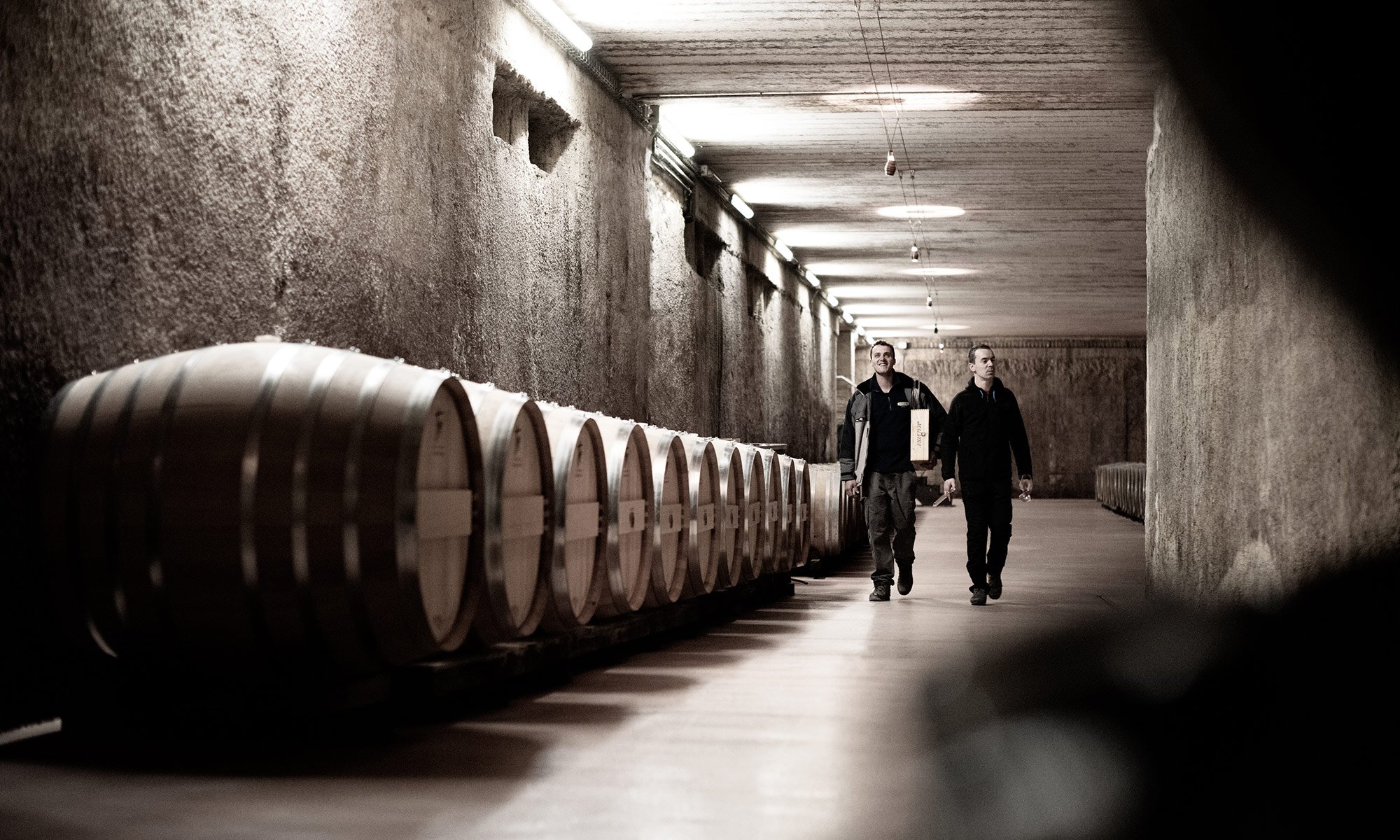
The winery is open every day, by reservation only, paid by card when you book. A visit starts in a tasting room looking over the vineyards, then goes down into the 1,500 square metre underground barrel cellar, with handmade grissini and hazelnuts alongside the wines. The Discover Roero tasting pours six wines for 35 euros per person, and the Gran Cru tasting six wines for 65 euros. The family speaks Italian, English and French, and there is parking on site.
If you want to stay, Villa Tiboldi, which the family bought in 1995, stands next to the winery: ten rooms with a restaurant, garden and swimming pool. It makes Canale an easy base for the Roero, with Alba just across the river.
Sources
- https://www.malvira.com/en/winery-roero-canale/past-and-present/
- https://www.malvira.com/en/winery-roero-canale/the-damonte-family/
- https://www.malvira.com/en/winery-roero-canale/labels-tarot-cards/
- https://www.malvira.com/en/vineyards/
- https://www.malvira.com/en/vineyards/renesio-vineyard/
- https://www.malvira.com/en/vineyards/vigneto-ss-trinita/
- https://www.malvira.com/en/vineyards/saglietto-vineyard/
- https://www.malvira.com/en/vineyards/vigneto-boiolo-e-serra-denari/
- https://www.malvira.com/en/organic/
- https://www.malvira.com/en/winery-roero-canale/tour-tastings/
- https://www.malvira.com/en/hospitality/
- https://www.consorziodelroero.it/en/producers/malvira/
- https://www.vignaioli.it/consorzio-roero-massimo-damonte-nuovo-presidente/ (10 July 2023)