Produttori del Barbaresco: Nine Crus, One Cellar and a Priest's Idea
How a parish priest and nineteen growers built the cooperative that bottles Barbaresco hill by hill, and how to visit.
Il Vino Bello ·
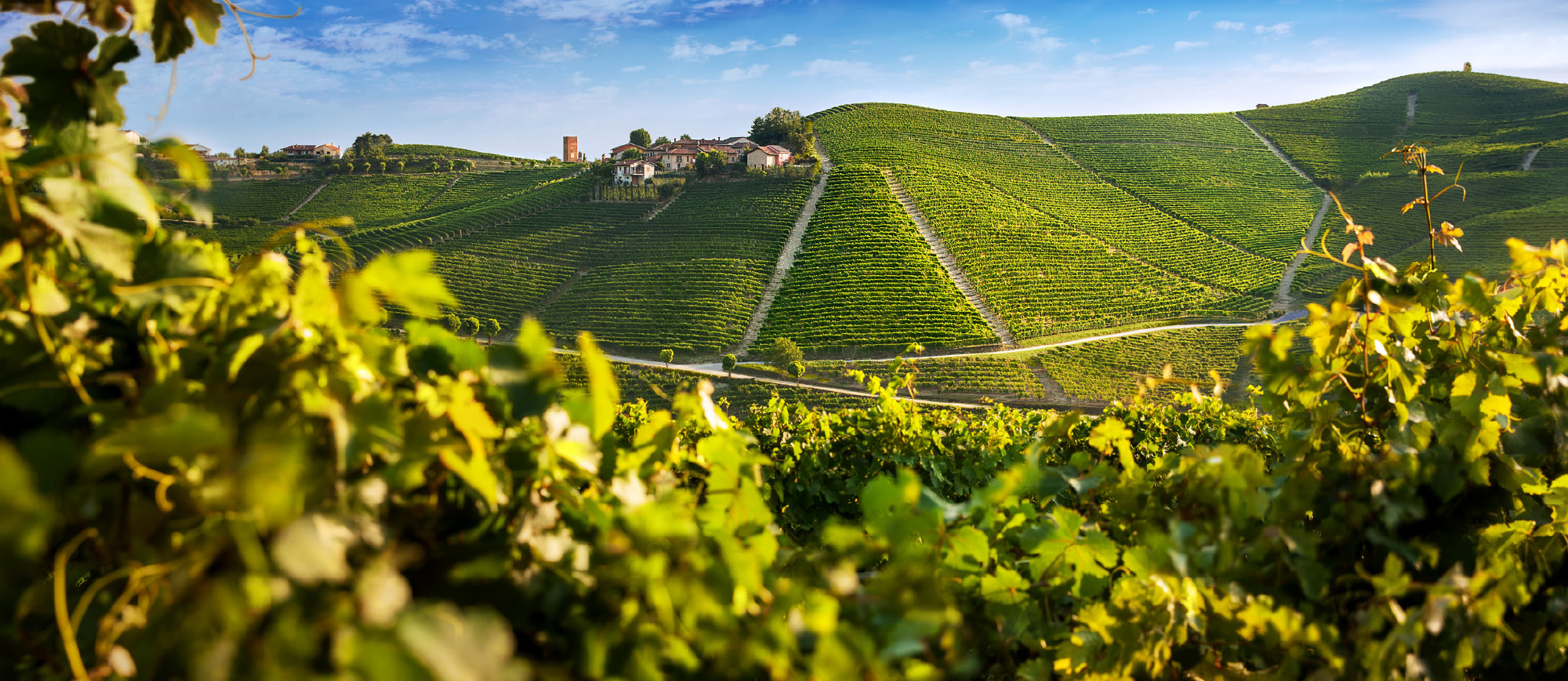
In Barbaresco, the cellar at the foot of the village tower belongs not to one family but to more than fifty. Produttori del Barbaresco makes only Nebbiolo, from its members' vineyards, and in the best years it bottles nine single-vineyard Riserve side by side, all made the same way. If you want to understand how one Barbaresco hill differs from the next, there are few better places to start.
A professor, a priest and nineteen growers
The cooperative tells its story in two chapters. In 1894 Domizio Cavazza, head of the Royal School of Oenology in Alba and owner of Barbaresco's castle, gathered nine farmers and landowners into the "Cantine Sociali di Barbaresco" and named the wine after the village. Before then, the cooperative's history explains, Nebbiolo grown here was sold to make Barolo or drunk as simple table wine. Cavazza died in 1913, and his cellar closed in the 1920s.
The second chapter began with a parish priest. Don Fiorino Marengo arrived just after the war and, in 1958, brought together nineteen growers to found the Produttori del Barbaresco. The first vintage was made in the courtyard of his house, and by 1960 a proper cellar stood at the foot of the village tower, where it still is. Aldo Vacca, the cooperative's managing director, told Bordeaux Index in 2022 that both his grandfathers were among the founders.
The rules that made it work
For three decades the cellar was run by Celestino Vacca, remembered on the cooperative's site as "il segretario". He held to the rules Don Fiorino had set: only Barbaresco, every member delivers all of their Nebbiolo, and profits are shared according to the quality of the grapes, not only the quantity. In the same interview Aldo Vacca called those decisions "totally revolutionary in the '50s".
Today more than fifty families farm about 120 hectares of Nebbiolo, each looking after their own vineyards. The cooperative's site puts production at around 650,000 bottles a year; in 2022 Vacca gave a figure of about 600,000, half Barbaresco, a quarter Langhe Nebbiolo and a quarter Riserva crus. It still describes itself as the only single-variety winery in the Langhe.
Two wines every year, nine in the great ones
Every vintage gives two wines. The Langhe Nebbiolo comes from the members' younger vineyards and is bottled in September; the 2025, bottled last month according to our wine page, is the youngest release. The Barbaresco, made since 1958, blends grapes from across the zone, spends more than three weeks on its skins and ages in 50 hectolitre oak casks.
In vintages judged excellent across the whole zone, nine crus are bottled separately and released after four years as Riserva. They were first made in 1967 and are all vinified exactly the same way, so tasting them is, in the cooperative's words, almost "a walk through the vineyards of Barbaresco" (our translation). Its own notes on each:
- Asili: a south-west facing bowl giving wines that are intense and rather closed when young.
- Rabajà: where the village's two main ridges meet. First bottled on its own in 1970, when Ristorante Guido in Costigliole d'Asti bought the whole production.
- Montestefano: nicknamed "the Barolo of Barbaresco", one of the steepest slopes and usually among the last picked. First vintage 1974.
- Montefico: full south, limestone-rich soil, described as among the most austere and most elegant of the zone.
- Ovello: the northernmost hill of the commune and cooler on average, where Cavazza himself owned vines.
- Pora: the hill closest to the Tanaro, with softer tannins and wines more open in youth. Its north side is oak woodland known for white truffle hunting.
- Pajè: a small amphitheatre cooled by northern breezes, with almost minty notes in cooler years.
- Muncagota: facing south-east, so it gets the morning sun. Bottled as Moccagatta from 1967 until the official vineyard names of 2007 adopted the dialect form.
- Rio Sordo: the lowest of the nine, topping out at 250 metres, and the last added, first bottled in 1978.
A tenth Riserva, Don Fiorino, goes back to the older habit of blending the best historic vineyards into one wine. The 2016 spent 30 months in 25 hectolitre French oak casks, and about 16,000 bottles were made.
Reading the vintages
The cooperative's vintage notes are refreshingly frank, and they explain what you will find in the shop. It calls 2021 "excellent from every point of view" (our translation), and all nine crus were made; according to the technical details on our wine pages, they were bottled in May 2025 after about 30 months in large oak. For 2022, which its note calls the driest and hottest year in Piemonte since 1950, and for 2023, the site lists only the Langhe Nebbiolo and the Barbaresco. The 2024 harvest it describes as a "wet" one of a kind not seen for more than twenty years.
Then came 2025, picked between 19 and 30 September, which the cooperative already calls a very fine vintage, fresh, elegant and balanced. So the 2021 Riserve are the bottles to look for now, and the 2025 Langhe Nebbiolo is the first taste of a year the cooperative rates highly.
Visiting
The cooperative's wine shop is on the main square of Barbaresco and has been selling direct since the 1960s, once as the only cellar in the village open to the public. It is open every day, Monday to Friday from 9.00 to 13.00 and 14.00 to 18.00, Saturday and Sunday from 10.00 to 18.00. Staff explain the history and the wines, and a visit ends with a short tasting; maps and books are on sale alongside the Langhe Nebbiolo and Barbaresco. For booking and information the number is +39 0173 635139.
If you are spending the day in the village, the regional enoteca's weekend producer tastings run until the end of November, as covered in our autumn tastings guide.
Sources
- https://www.produttoridelbarbaresco.com/la-cantina/la-storia/
- https://www.produttoridelbarbaresco.com/la-cantina/stile-produttivo/
- https://www.produttoridelbarbaresco.com/la-cantina/
- https://www.produttoridelbarbaresco.com/la-cantina/wine-shop/
- https://www.produttoridelbarbaresco.com/i-cru/
- https://www.produttoridelbarbaresco.com/millesimi/
- https://www.produttoridelbarbaresco.com/vini/barbaresco-docg/
- https://www.produttoridelbarbaresco.com/vini/barbaresco-docg-riserva-don-fiorino/
- https://bordeauxindex.com/learn/blog/an-interview-with-aldo-vacca-managing-director-at-produttori-del-barbaresco