Sweet
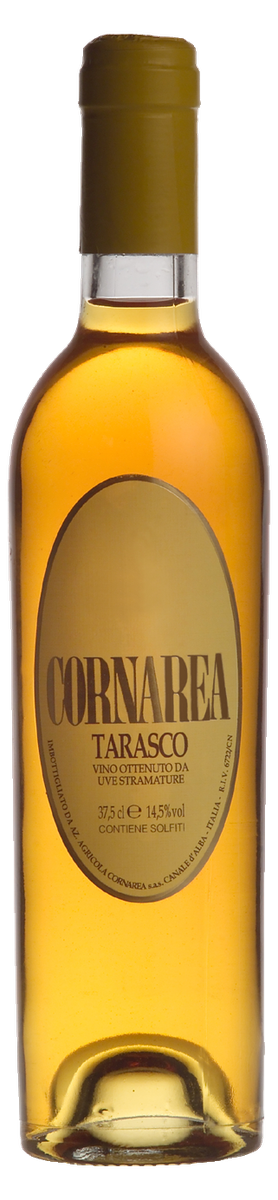
Tarasco
By Cornarea, Roero, Piemonte, Italy
Critics and guides
- Award: 5 Grappoli (Fondazione Italiana Sommelier, Bibenda 2027), vintage 2022 (source)
- Award: Faccino 96/100 (Doctor Wine, Guida Essenziale ai Vini d'Italia 2027), vintage 2022 (source)
Awards are shown as each guide published them, with a link to the source. Scores and awards belong to their publishers.
Passito from Arneis grapes, first made in 1982 from three forgotten rows that developed noble rot. The name comes from the dandelion (tarassaco), whose yellow flower recalls its colour.
Tasting notes
Bright gold. Very complex and intense nose of citrus, caramel, peach jam, fig and apricot, with coffee, liquorice, tobacco and walnut. Opulent, intense and enveloping on the palate, with great structure and persistence. Soft and sweet with acacia honey and fig jam, but a good acidity balances the finish so the aftertaste is not over-sweet.
Pairs well with
Blue cheeses such as natural Gorgonzola, Roquefort and Stilton; mature Robiola di Roccaverano; pate de foie gras; hazelnut cake and ice cream, dark chocolate and Canale peaches.
Technical details
- Style
- Sweet
- Denomination
- Vino ottenuto da uve appassite
- Grape
- Arneis
- Production area
- Top of the Cornarea hill, Canale (Roero)
- Soil
- Prevalently sand and ferrous clay, rich in magnesium
- Exposure
- South-west
- Harvest
- Grapes picked at the end of October on the wine page (the history page says no later than mid-October), then dried in crates in the cellar until December
- Vineyard planting
- 5 rows at the top of the vineyards, planted 1975; trellis with Guyot pruning; 20 quintals per hectare; average altitude 310 m
- Vinification
- Botrytis cinerea ('noble rot') develops on the ripe bunches in the ventilated, dry microclimate at the top of the hill and dehydrates the berries. The grapes dry in crates in the cellar until December and are pressed once water loss exceeds 80%. The wine rests at least 48 months in used oak barrels, which are never topped up, so evaporation and prolonged oxidation add complexity.
- Serving temperature
- 16-18 °C
More from Cornarea
- Barbera d'Alba, Barbera d'Alba DOC
- Enritard, Roero Arneis DOCG
- Mapoi, Vino Spumante Brut
- Nebbiolo d'Alba, Nebbiolo d'Alba DOC
- Roero, Roero DOCG
- Roero Arneis, Roero Arneis DOCG