Gli strumenti per il vino che vale la pena avere
Ti servono molti meno accessori di quanto suggeriscano le enoteche. Ecco la breve lista degli strumenti che fanno davvero la differenza, cosa fa ciascuno e quando valgono la pena quelli più costosi.
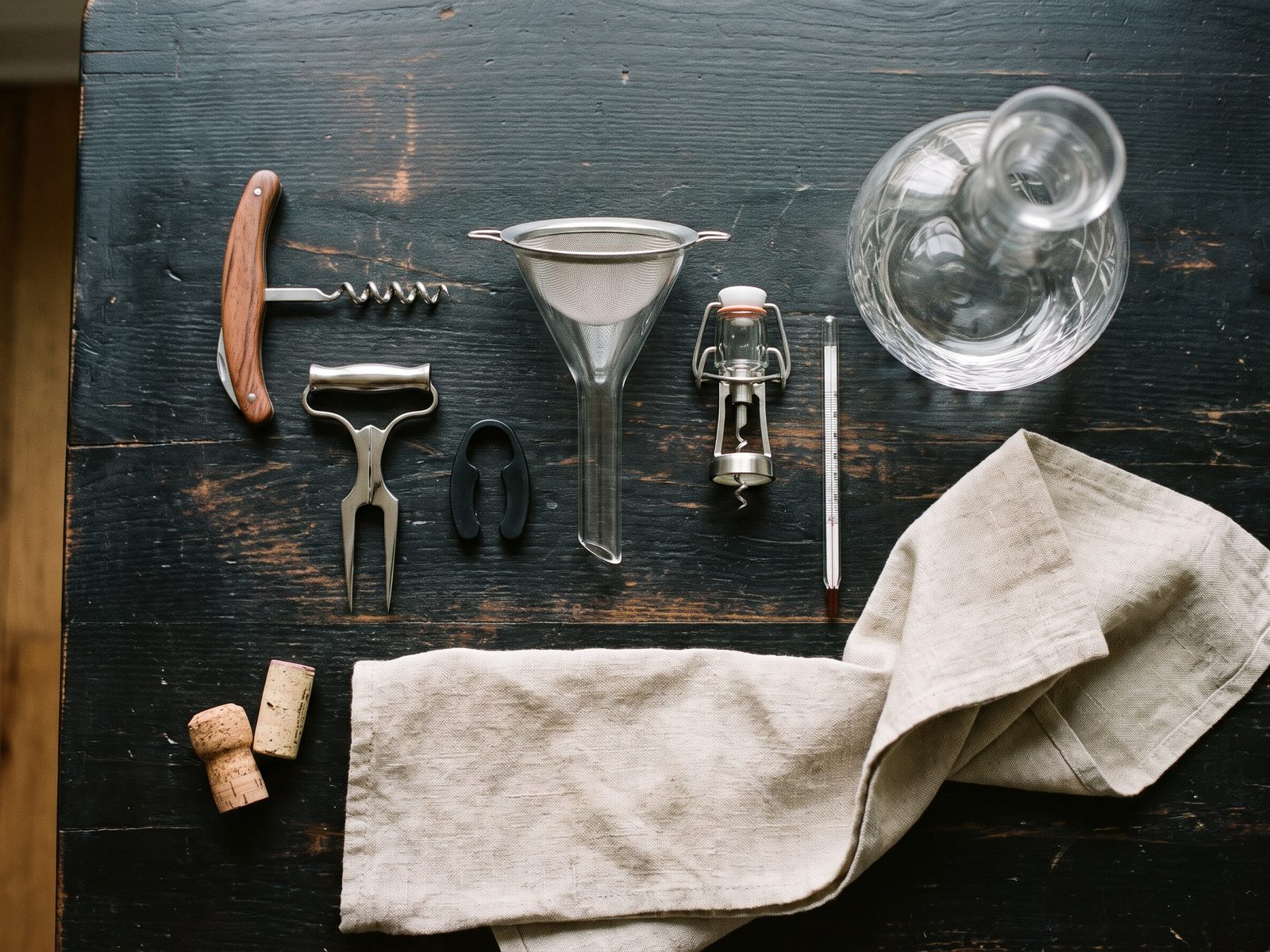
Perché funziona
Almost every wine tool solves one of four problems: getting the bottle open, getting the wine off its sediment, getting it to the right temperature, and keeping it once it is open. A good tool for each, and a decent glass, covers nearly everything you will meet.
Price matters less than design. A well-made waiter's friend with an open spiral worm opens a bottle better than most expensive lever machines, and a simple carafe decants as well as a sculpted crystal decanter. The tools worth spending more on are the ones that solve a problem nothing else can: an Ah-So or Durand for old corks, and a Coravin if you like a single glass from a good bottle.
Cosa ti serve
- Waiter's friend corkscrew: The one tool everyone needs.
- Ah-So two-prong cork puller (facoltativo): For soft, old corks.
- Durand cork puller (facoltativo): The safest choice for very old, crumbly corks.
- Foil cutter (facoltativo): Cuts a clean capsule in one twist.
- Decanter: Wide-based for young reds; narrower for old wines.
- Decanting funnel with strainer (facoltativo): Catches sediment and cork crumbs as you pour.
- Decanter cleaning beads and drying stand (facoltativo): Keep the decanter spotless without scratching it.
- All-purpose wine glasses: A tulip-shaped glass for every style.
- Large-bowled Nebbiolo glasses (facoltativo): For Barolo and Barbaresco.
- Sparkling wine stopper: Holds the bubbles for a day or two.
- Inert gas preserver (facoltativo): Argon spray for opened bottles.
- Coravin (facoltativo): A glass from a special bottle without pulling the cork.
- Wine thermometer (facoltativo): For serving at the right temperature.
- Ice bucket: For quick chilling and keeping bottles cold at the table.
- Wine fridge (facoltativo): Steady temperature for a growing collection.
Passo dopo passo
- Start with a waiter's friend A two-step lever corkscrew with a sharp, open spiral worm and a small foil knife. It opens almost any bottle and fits in a pocket. Check that the worm is a hollow spiral, like a pig's tail, rather than a solid screw.
- Add an Ah-So or a Durand for older bottles If you keep wines for more than ten years, a two-prong Ah-So lifts soft corks from the outside. The Durand, which combines prongs with a worm, is the safest choice for very old, crumbly corks. See opening old bottles.
- One decanter, simple shape A wide-based decanter or carafe of about 1.5 litres for young reds, and if you open old wines, a narrower one for gentle pouring. Choose one you can clean easily.
- Glasses before gadgets Two or three good glasses do more for wine than any accessory: an all-purpose tulip glass, and a large-bowled one for Nebbiolo if you drink a lot of Barolo and Barbaresco.
- A stopper for bubbles and a way to keep leftovers A hinged sparkling wine stopper, a couple of half bottles to fill with leftovers, and if you like, an argon spray. See keeping an open bottle.
- Keep the rest for when you need it A thermometer, an ice bucket, a decanting funnel and a drying stand all earn their place once you open bottles often. A wine fridge is worth it as soon as you keep more bottles than fit in a cool cupboard.
Tools that are not worth it
Aerating pourers that promise to replace decanting add air, but only a little, and a decanter does the same job better. Winged corkscrews are easy to use but their thick screws tear soft corks. Wine-chilling sticks rarely cool a bottle meaningfully; ten minutes in iced water does.
Se qualcosa va storto
My corkscrew keeps tearing corks
The worm is probably a solid screw or blunt. Replace it with a waiter's friend that has an open spiral worm with a sharp point.
My decanter has stains I cannot shift
Swirl warm water with decanter cleaning beads or a spoon of coarse salt and a little vinegar, rinse well and dry it upside down on a stand.